NEW DriveNest v2 — OneDrive support has arrived

Your cloud storage,
fully understood

Most people have no idea what's eating their cloud storage. DriveNest finds the duplicates, the forgotten files and the risky shares in Google Drive and OneDrive — and helps you clean them up, from one Android app.

Get it on Google Play

Limited-time offers

3 months free on Ultimate — plus 50% off every plan.

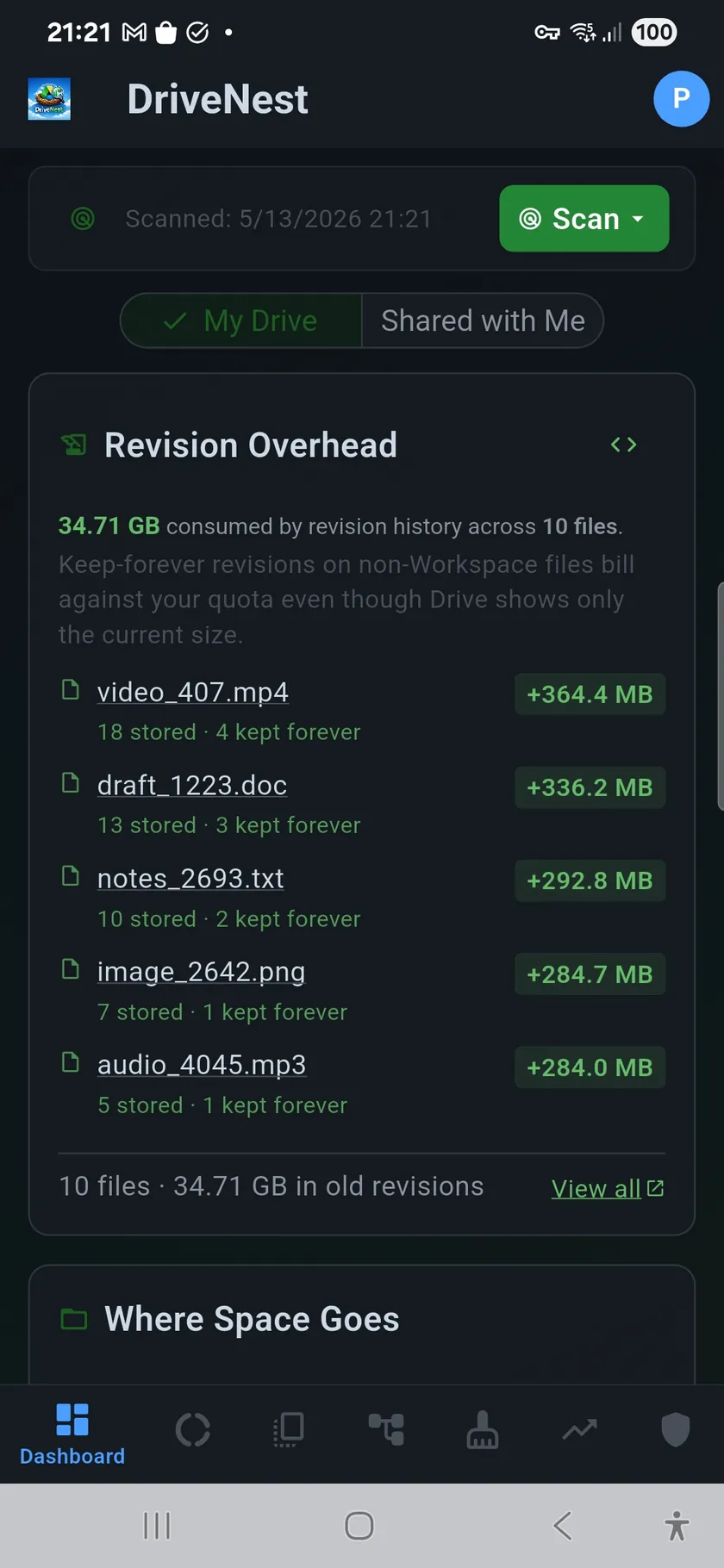
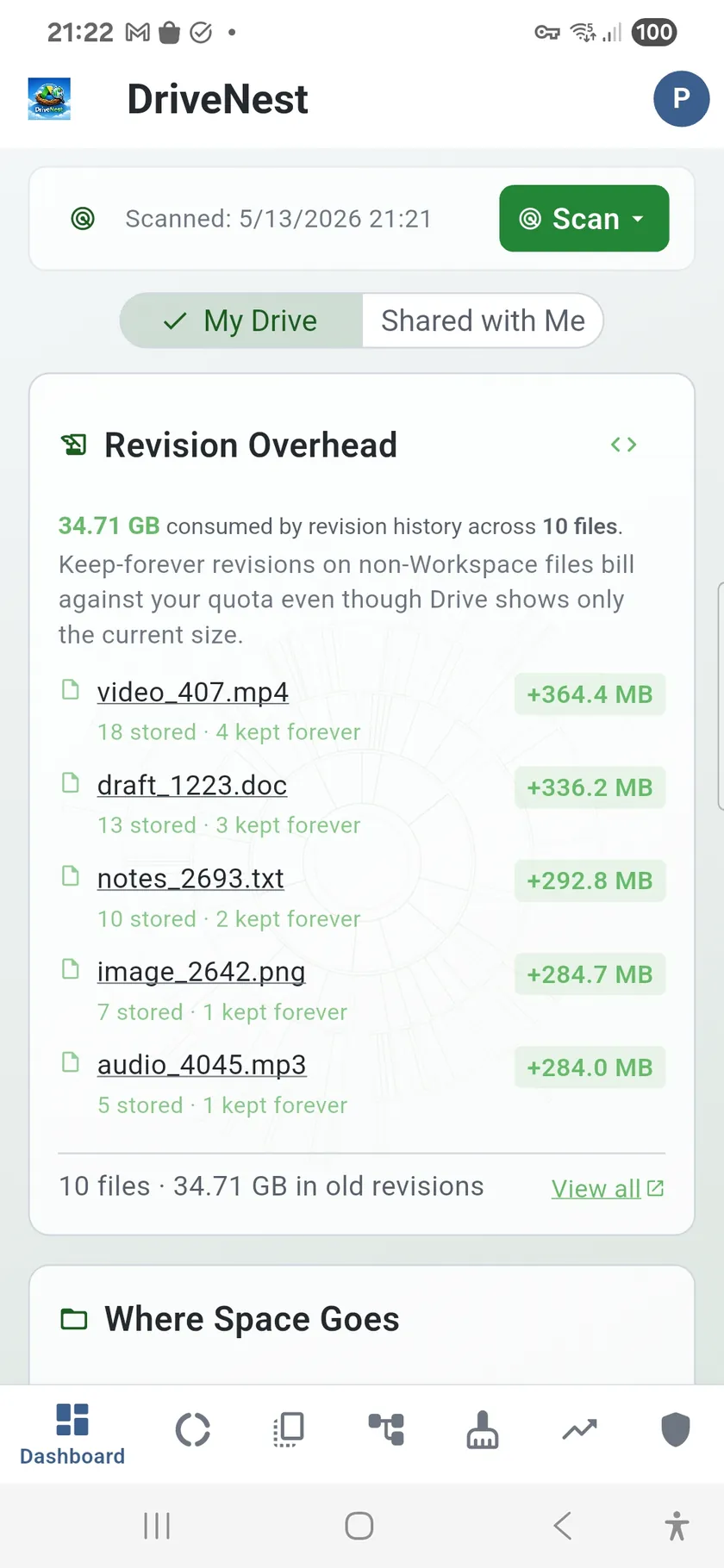
You came back from holiday with a few thousand photos, but those probably aren’t what filled your storage. Duplicates, old file versions still charged to your quota, and folders you forgot years ago usually account for far more. Two offers are running at the same time — you don’t have to pick one.

Ultimate subscription

3 months of Ultimate, on the house

Subscription only · not perpetual licences

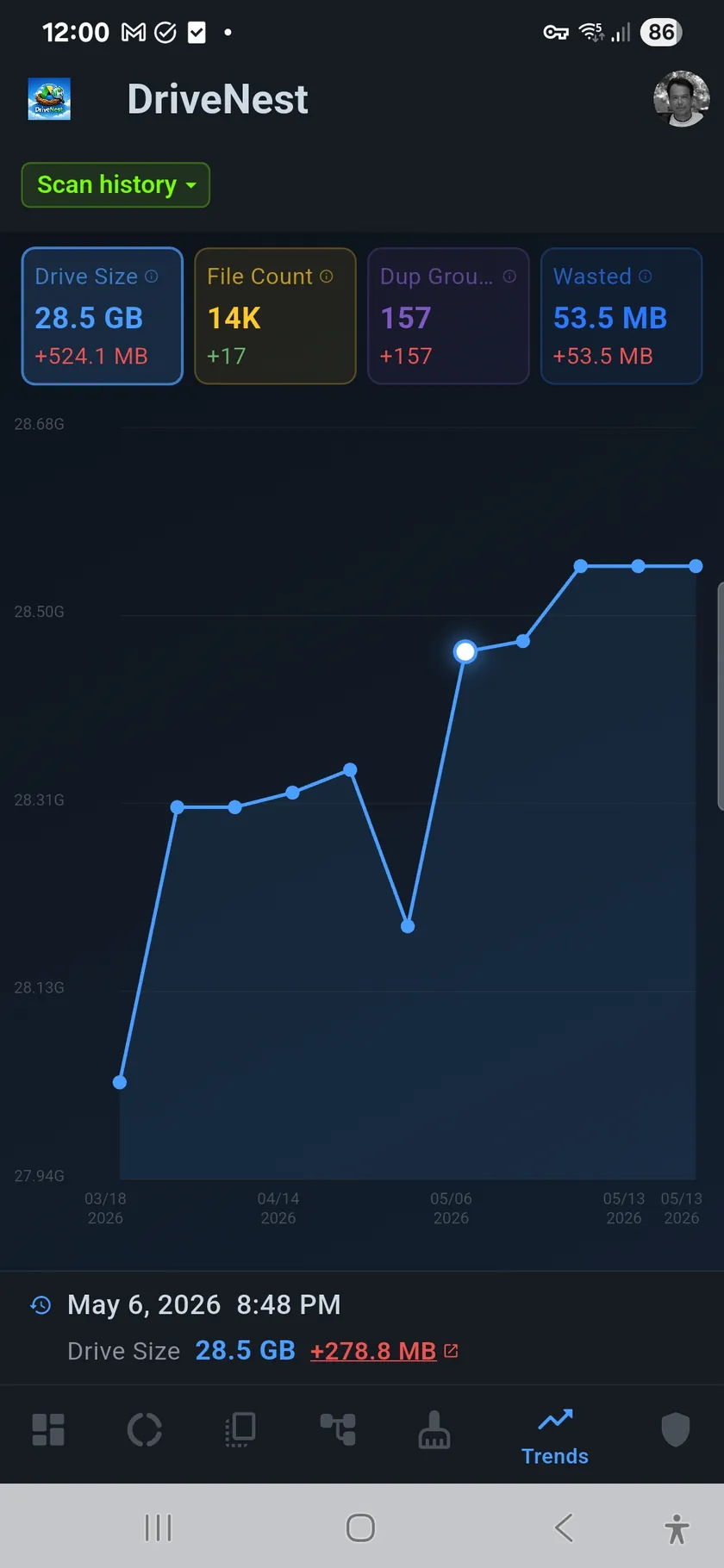
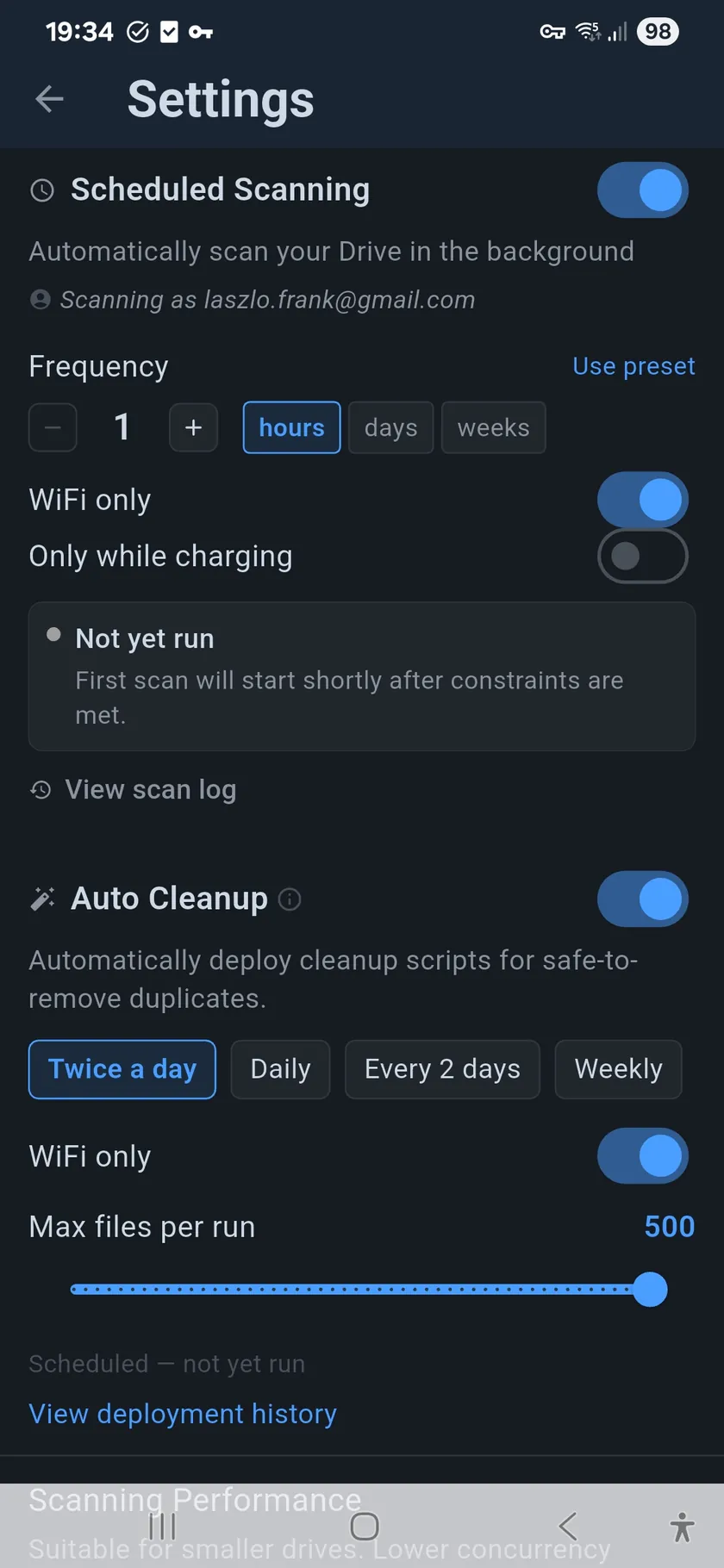
Start Ultimate on subscription and the first three months cost nothing — every Ultimate feature from day one: PDF reports, unlimited saved scans, multi-account scan storage, scan history and auto-cleanup deployment. Long enough to watch a trend line actually move, not just run one scan and guess.

Start 3 months free

Summer-end offer

50% off every DriveNest plan

Premium and Ultimate · perpetual or subscription

Half price across the board, on top of the free months — whether you subscribe or buy a perpetual licence outright. The month you’re most likely to pay for more storage is the month this should cost you the least.

Compare plans

Requires DriveNest 2.0.0.739 or laterupdate on Google Play first, or the offers won’t show up. Both run through Google Play at the same time and are applied at checkout — you don’t need to choose between them. The three free months apply to the Ultimate subscription only, not to perpetual licences. See what each plan includes.

What is DriveNest?

A cloud storage analyzer for Android — and since version 2 it covers Google Drive and Microsoft OneDrive side by side.

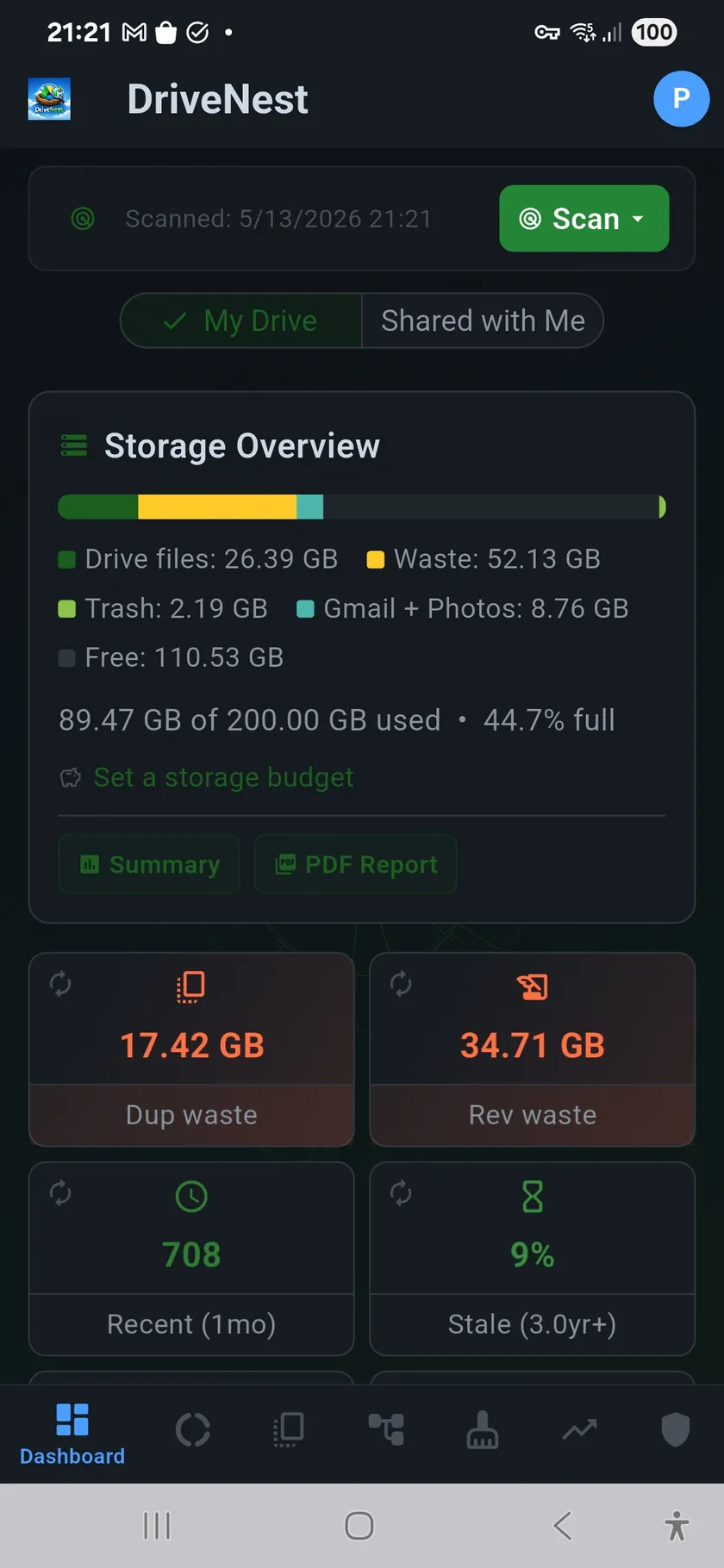
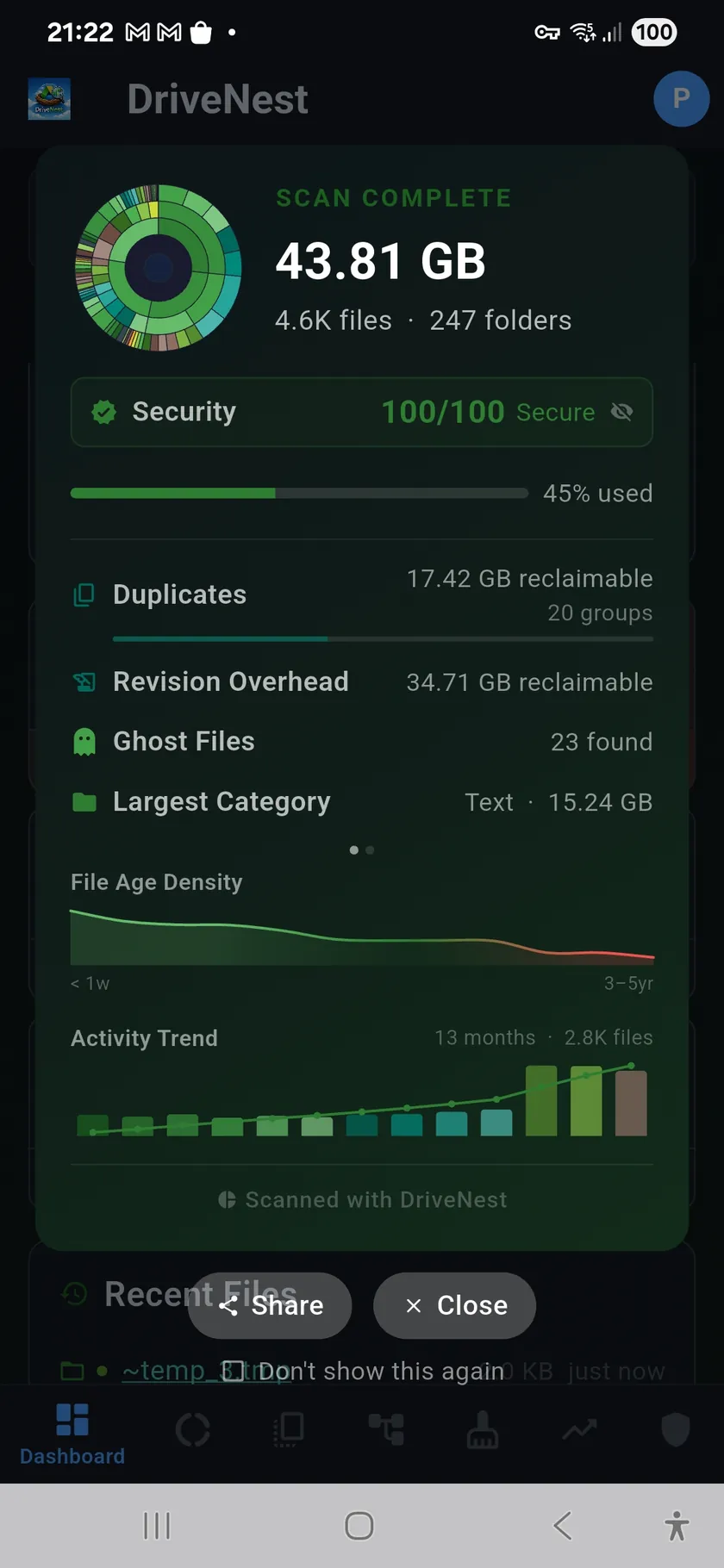
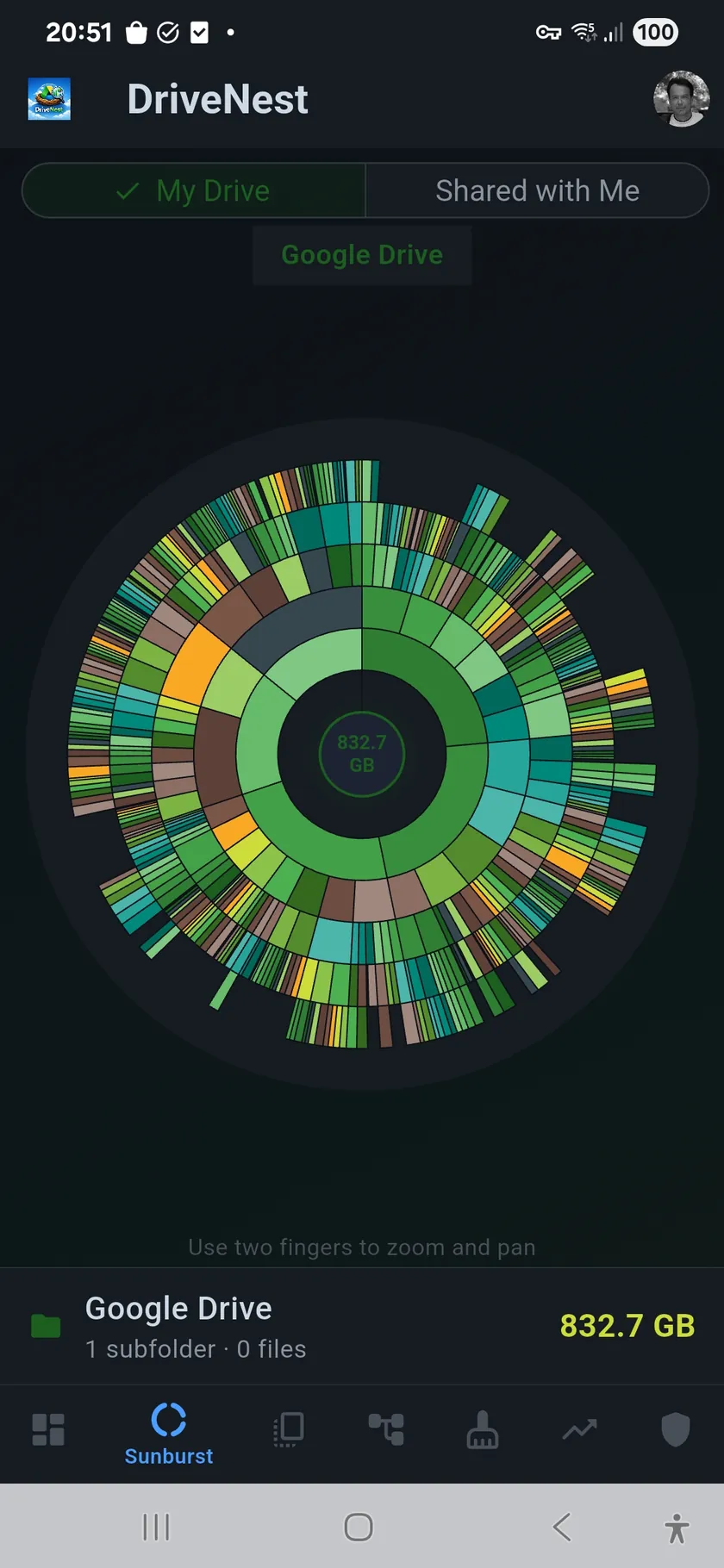
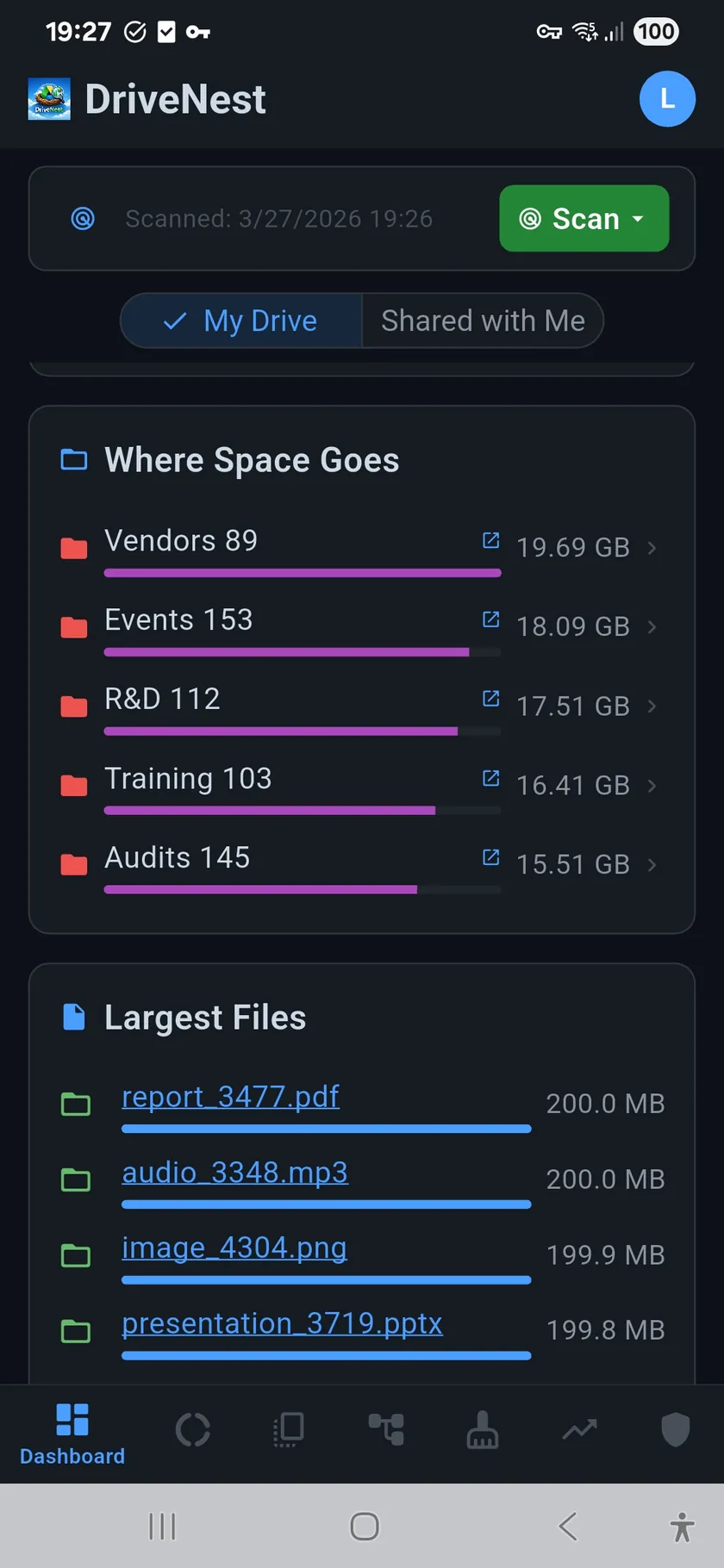
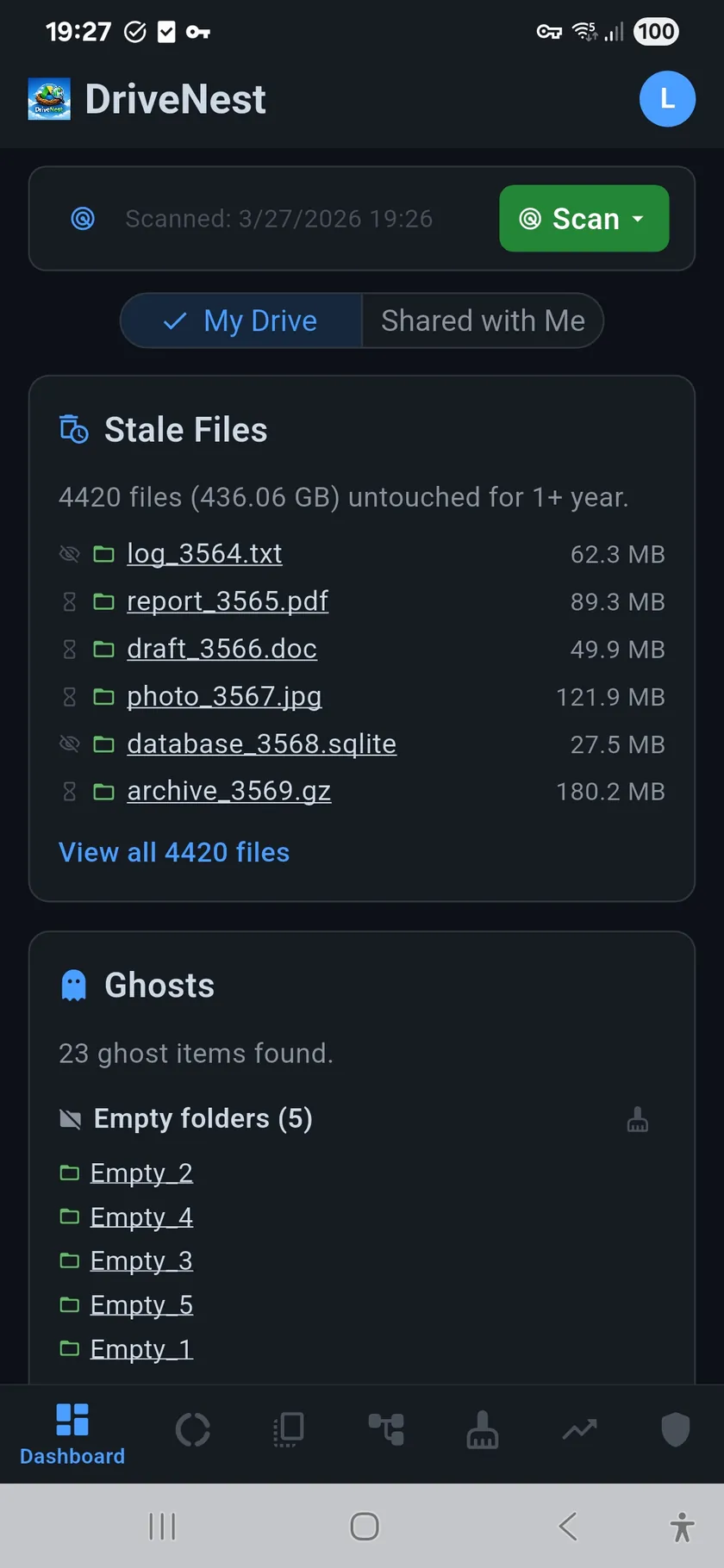
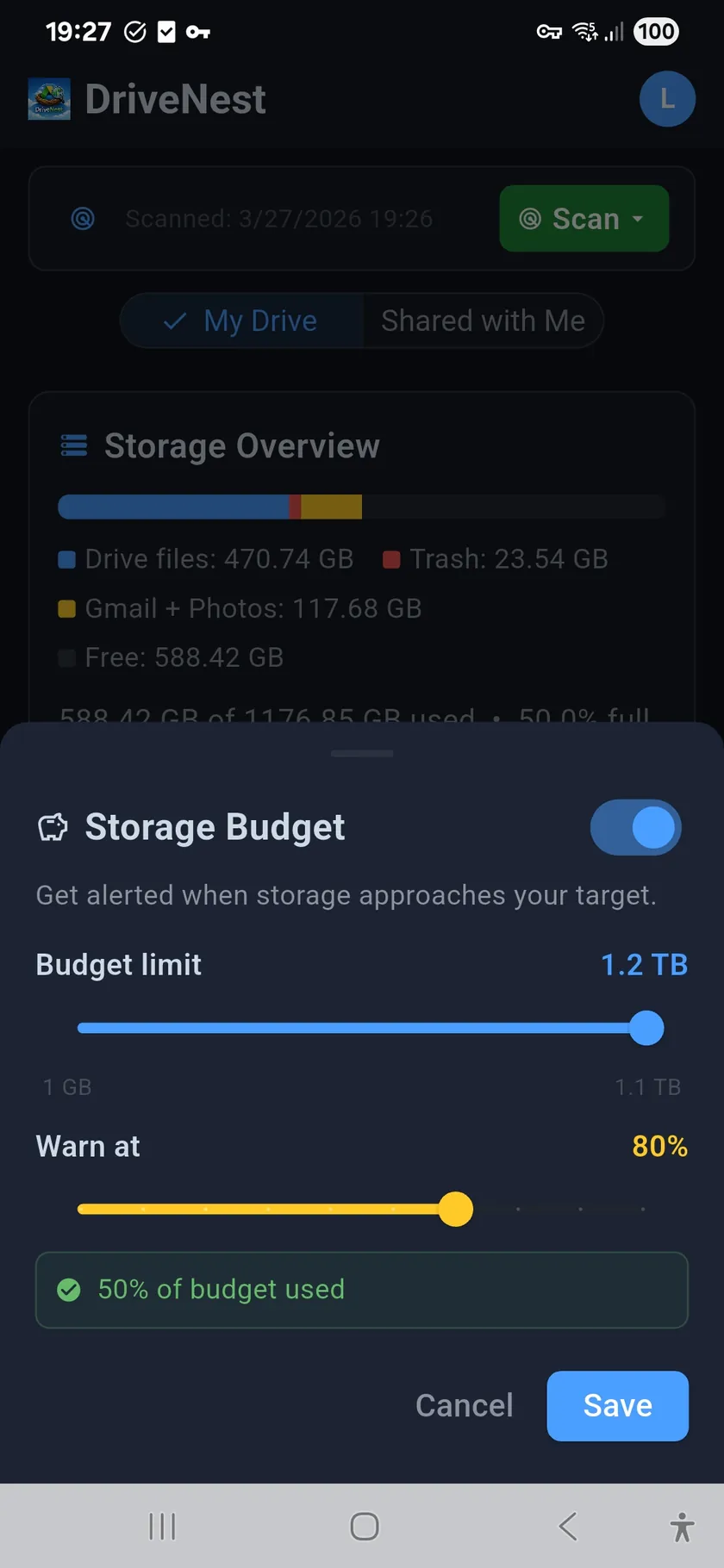
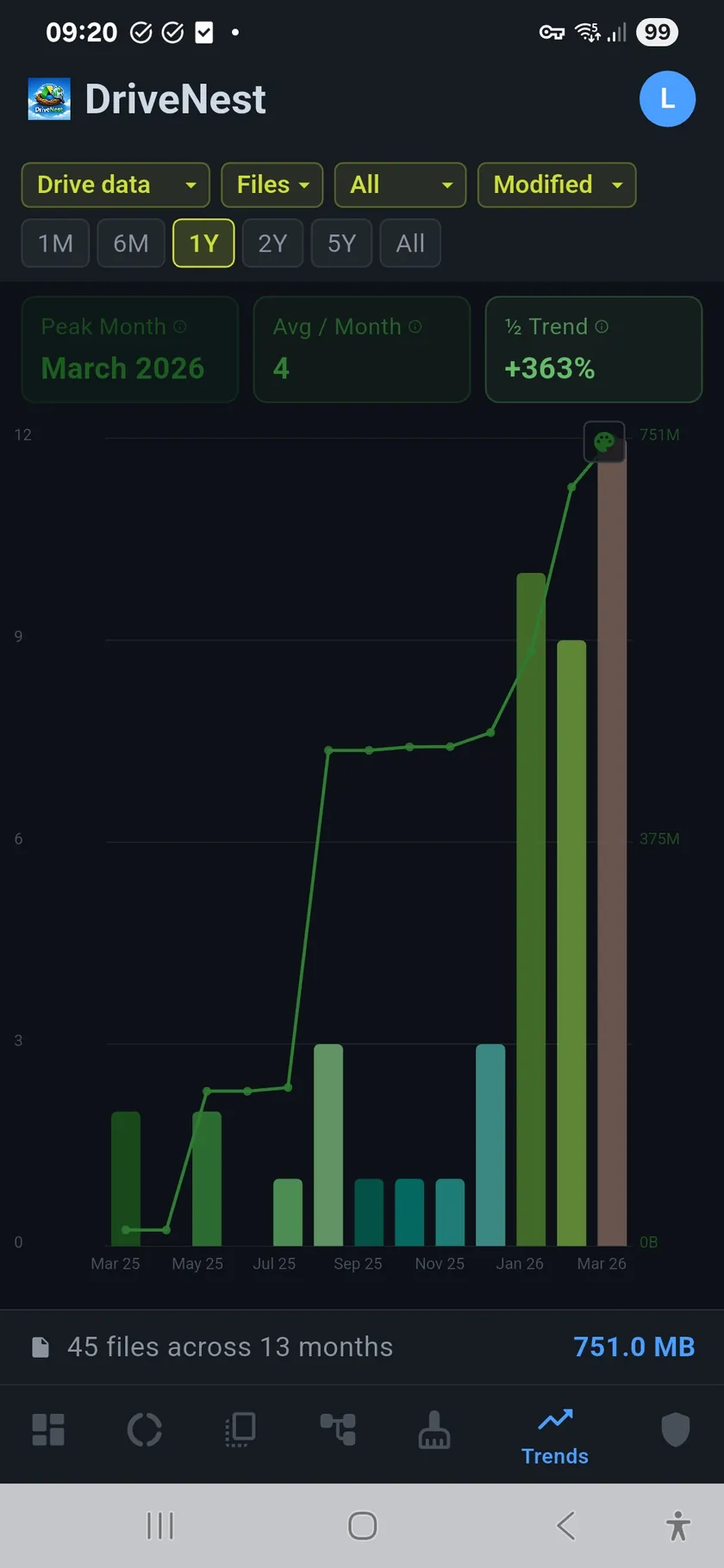
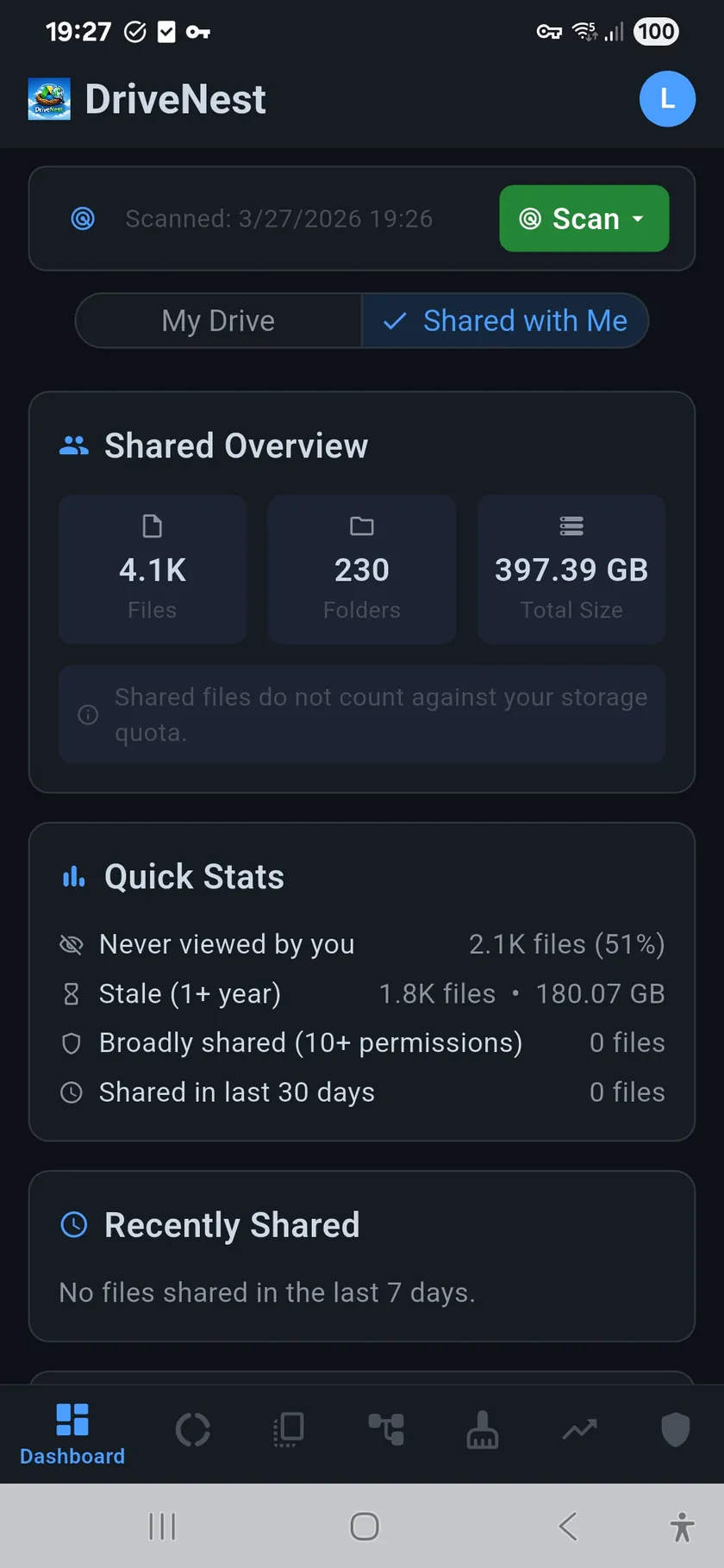
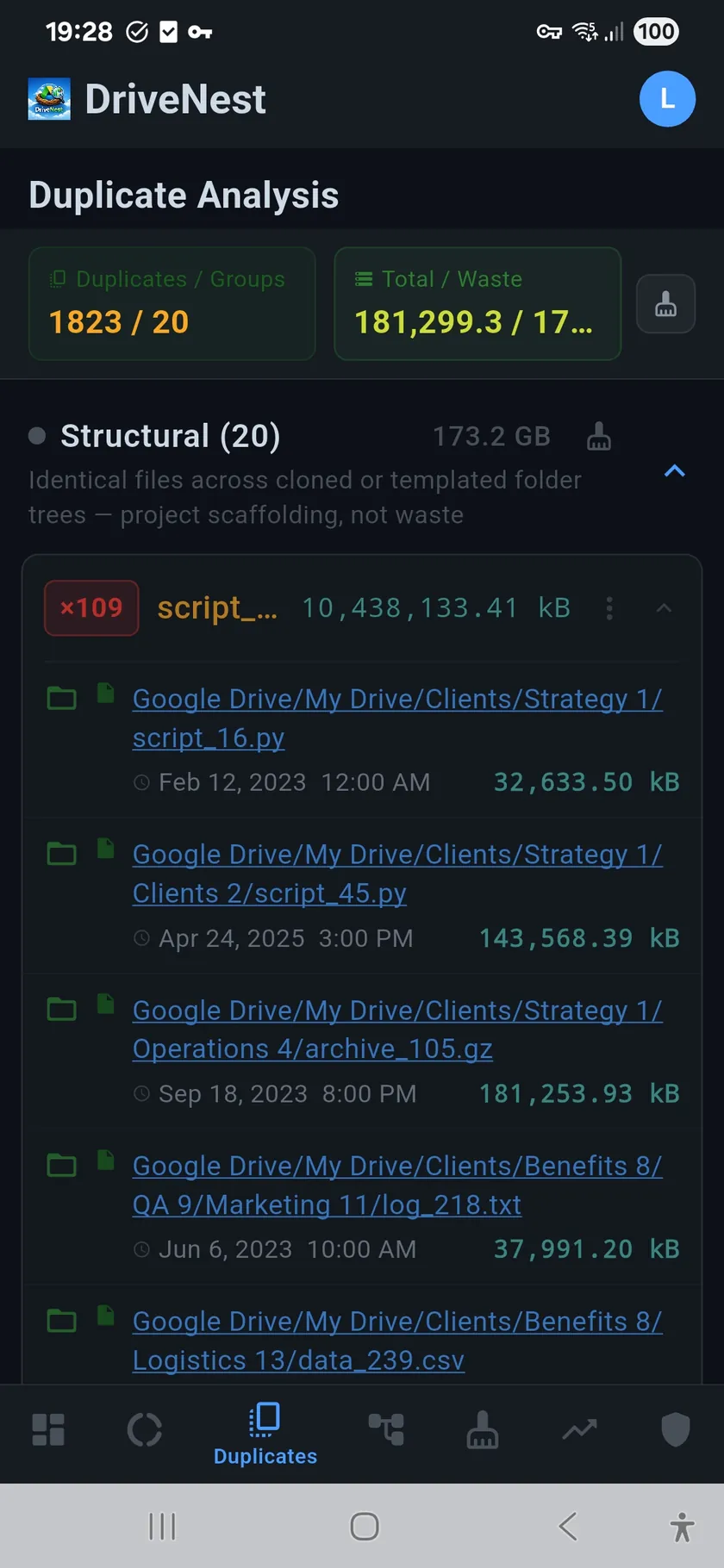
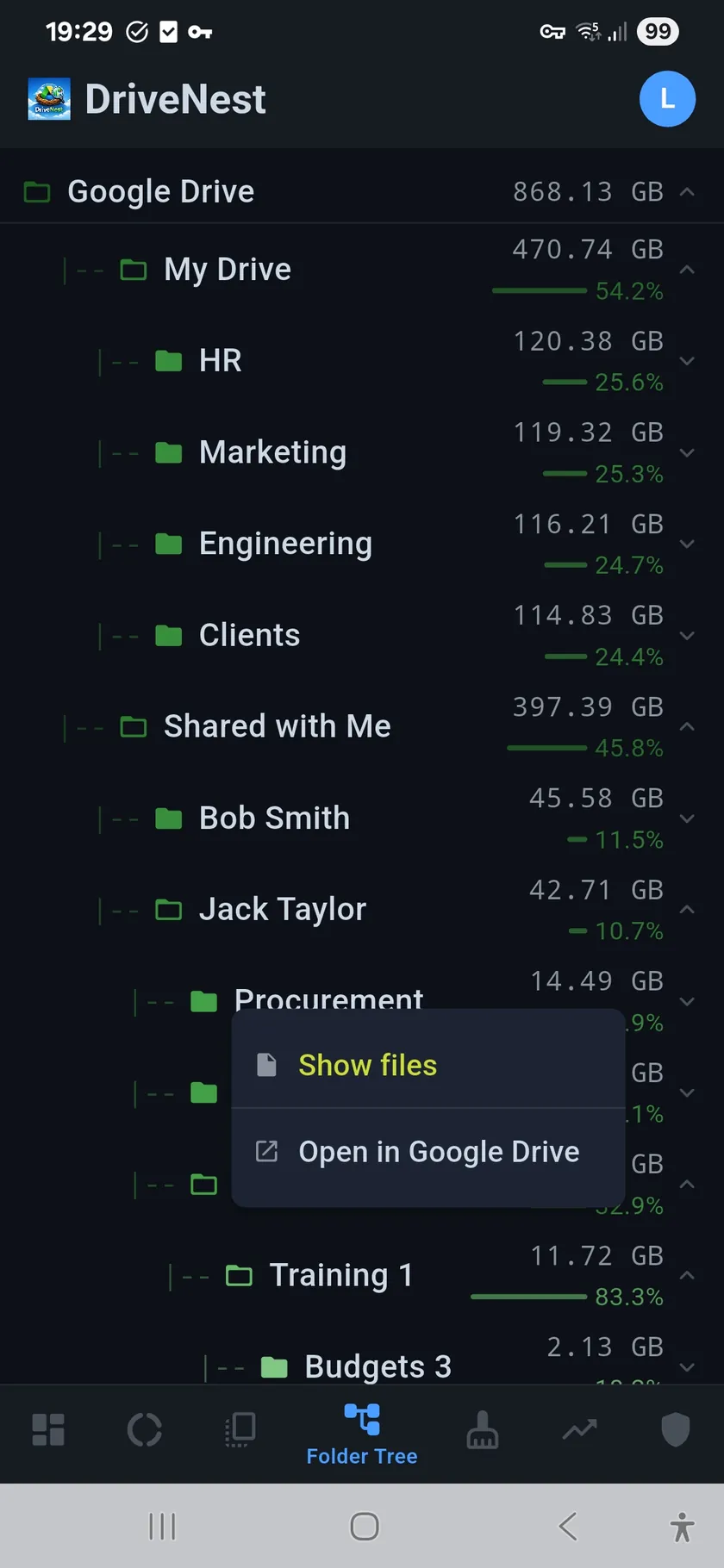
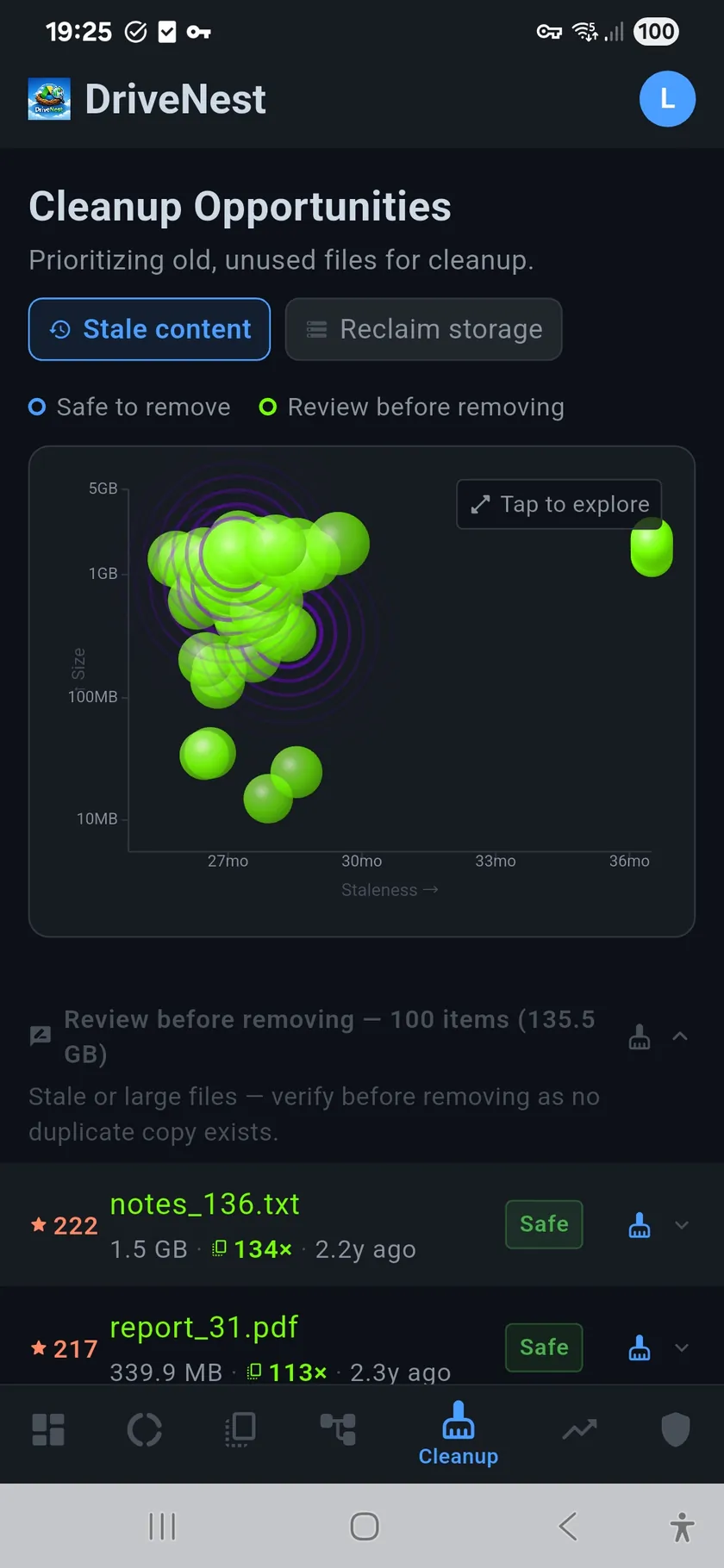
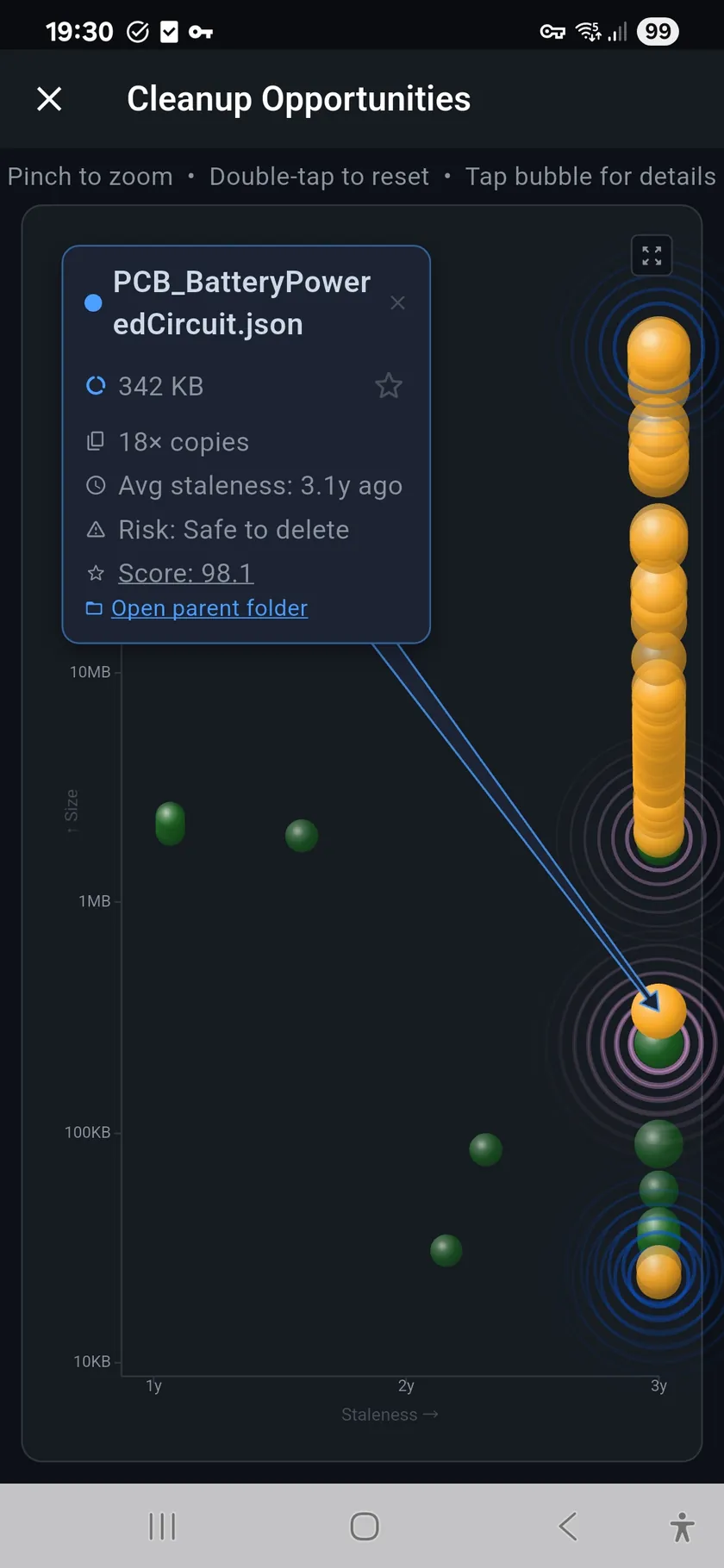
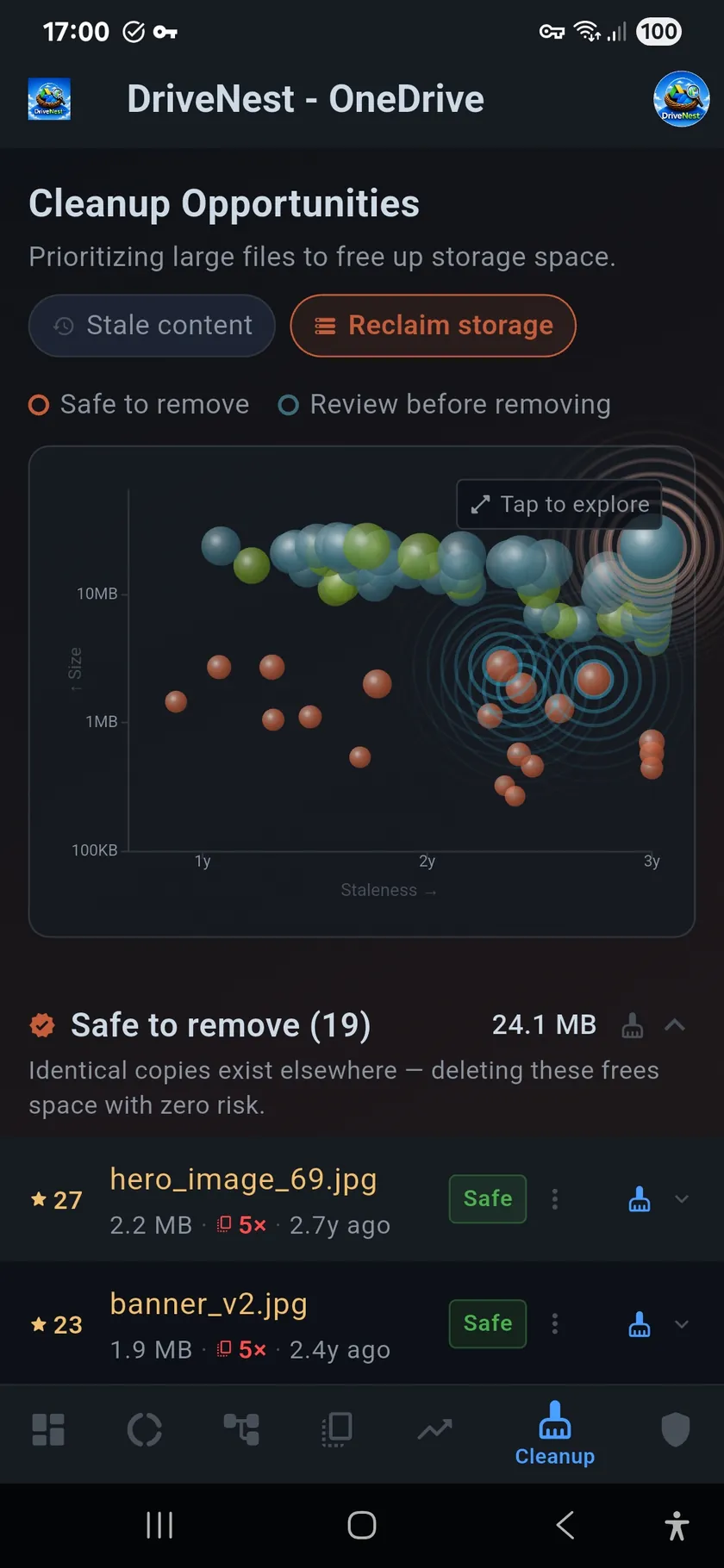
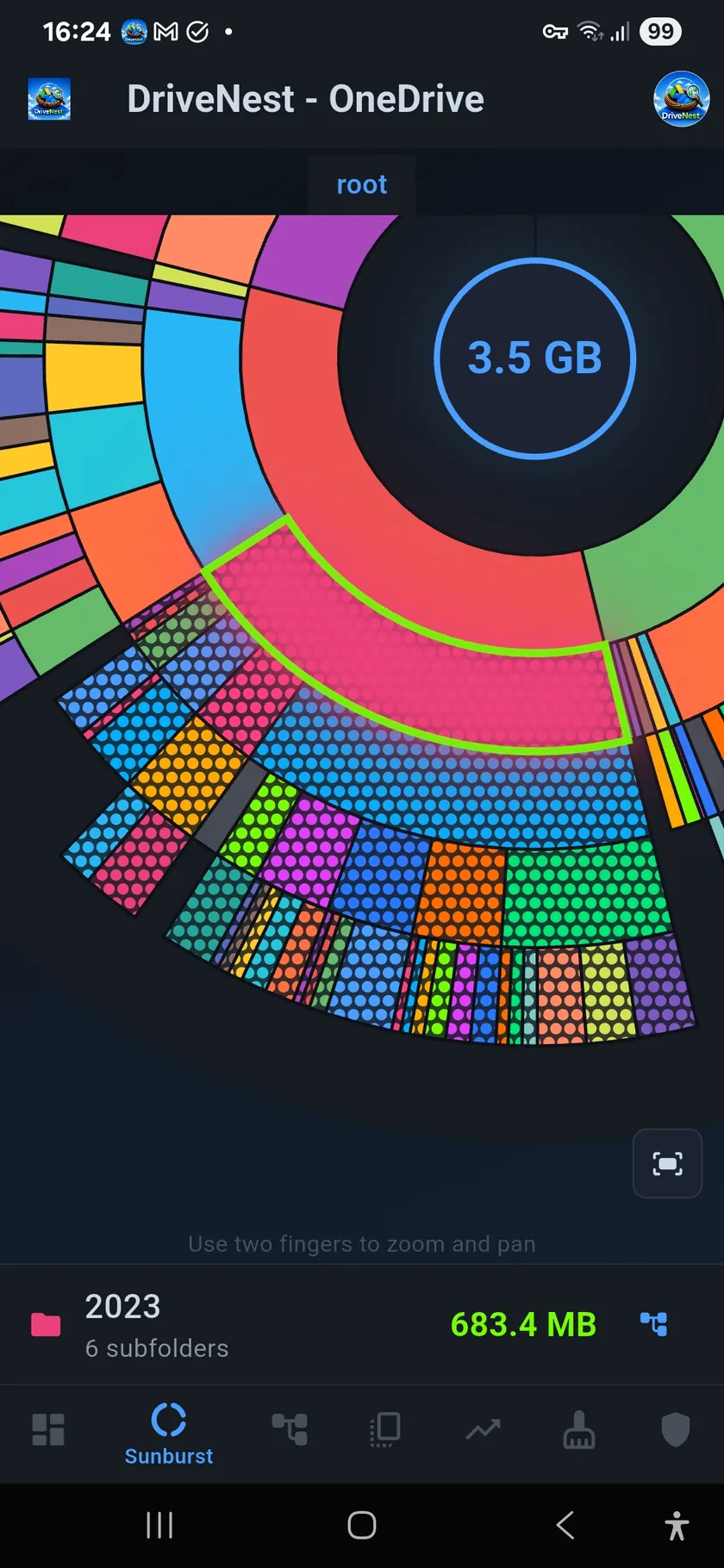
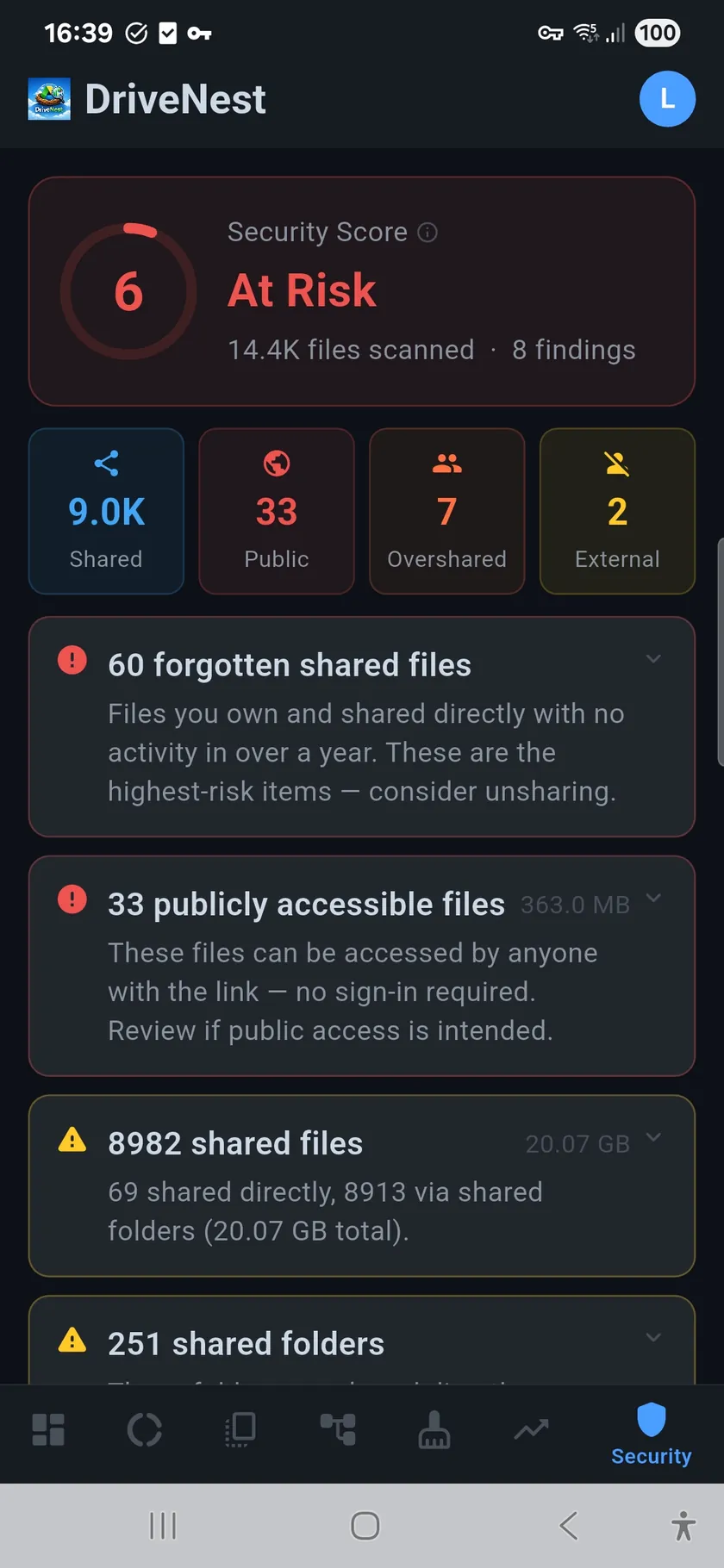
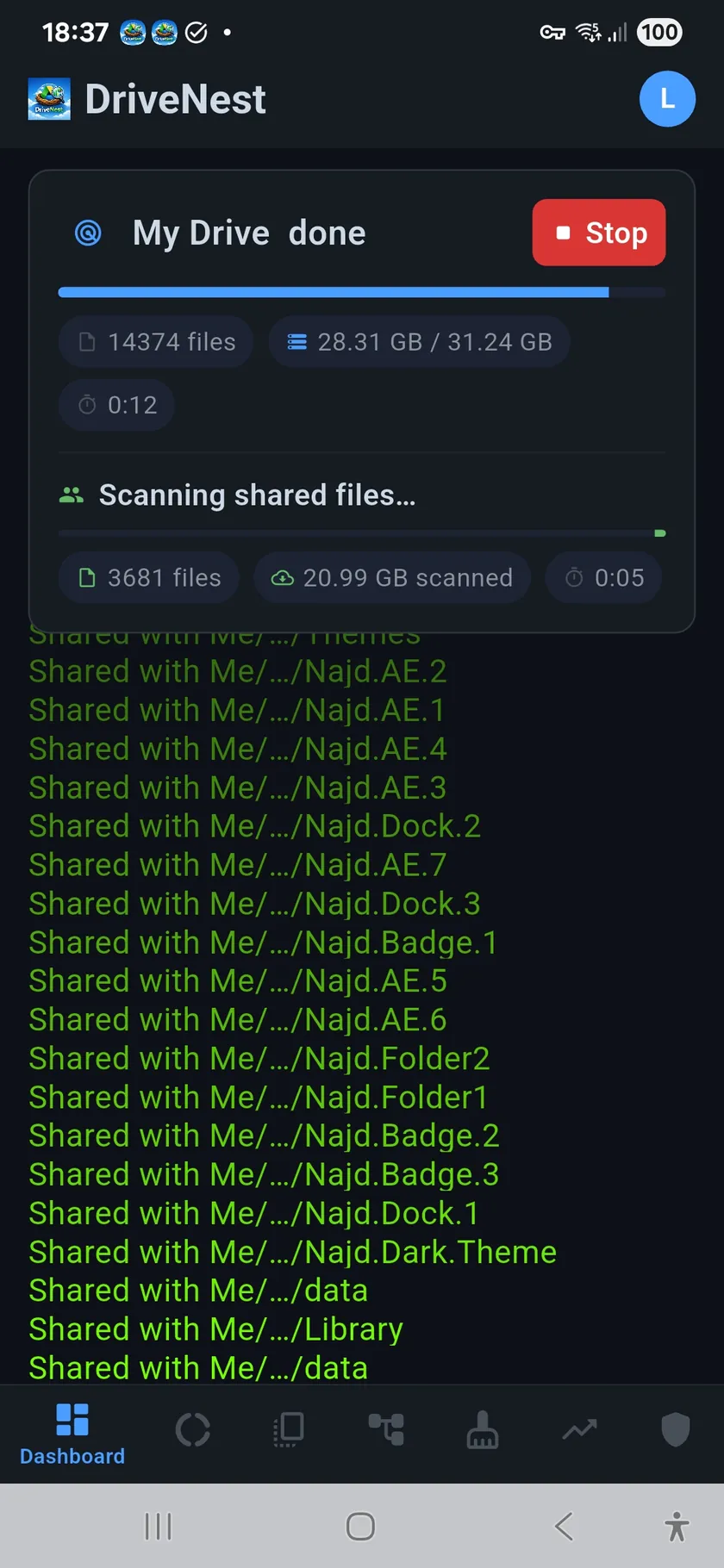
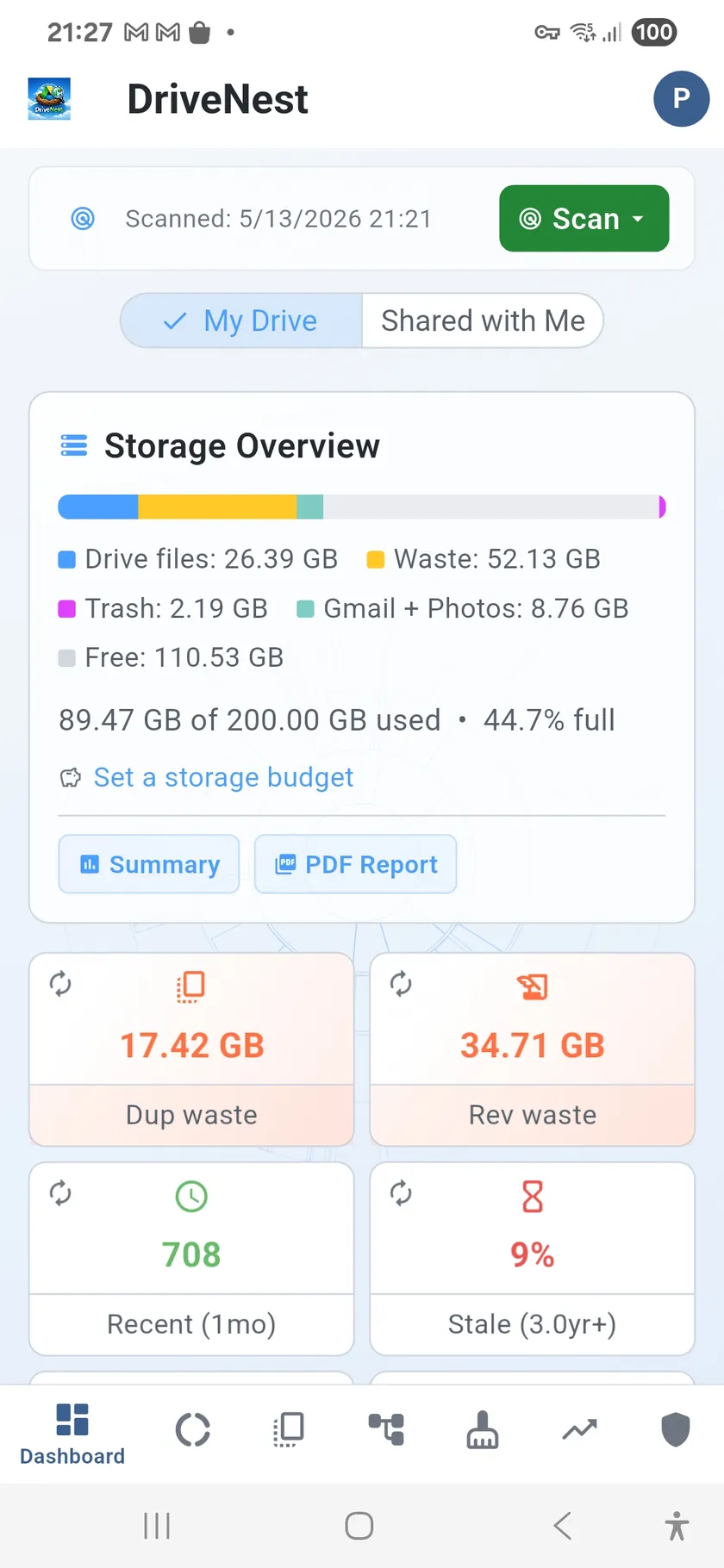
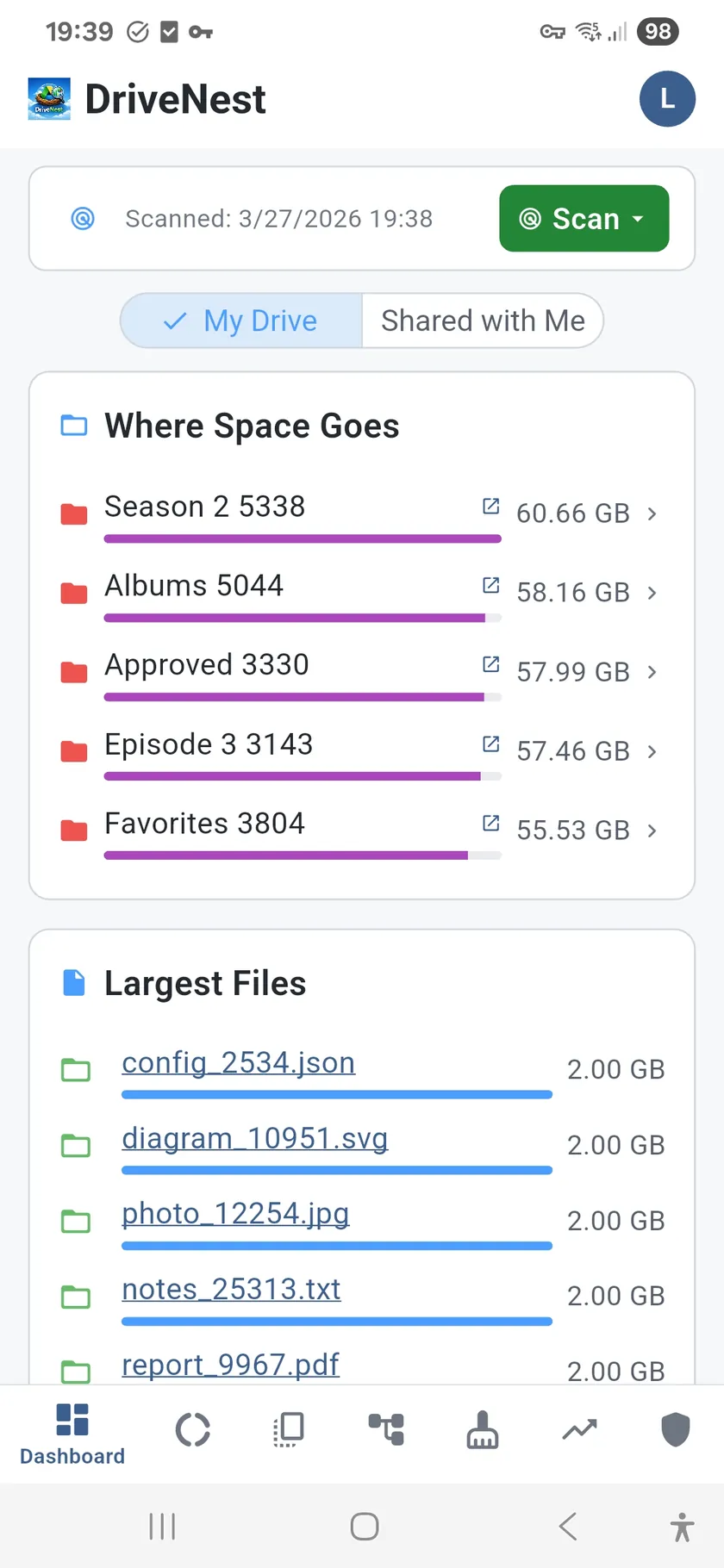
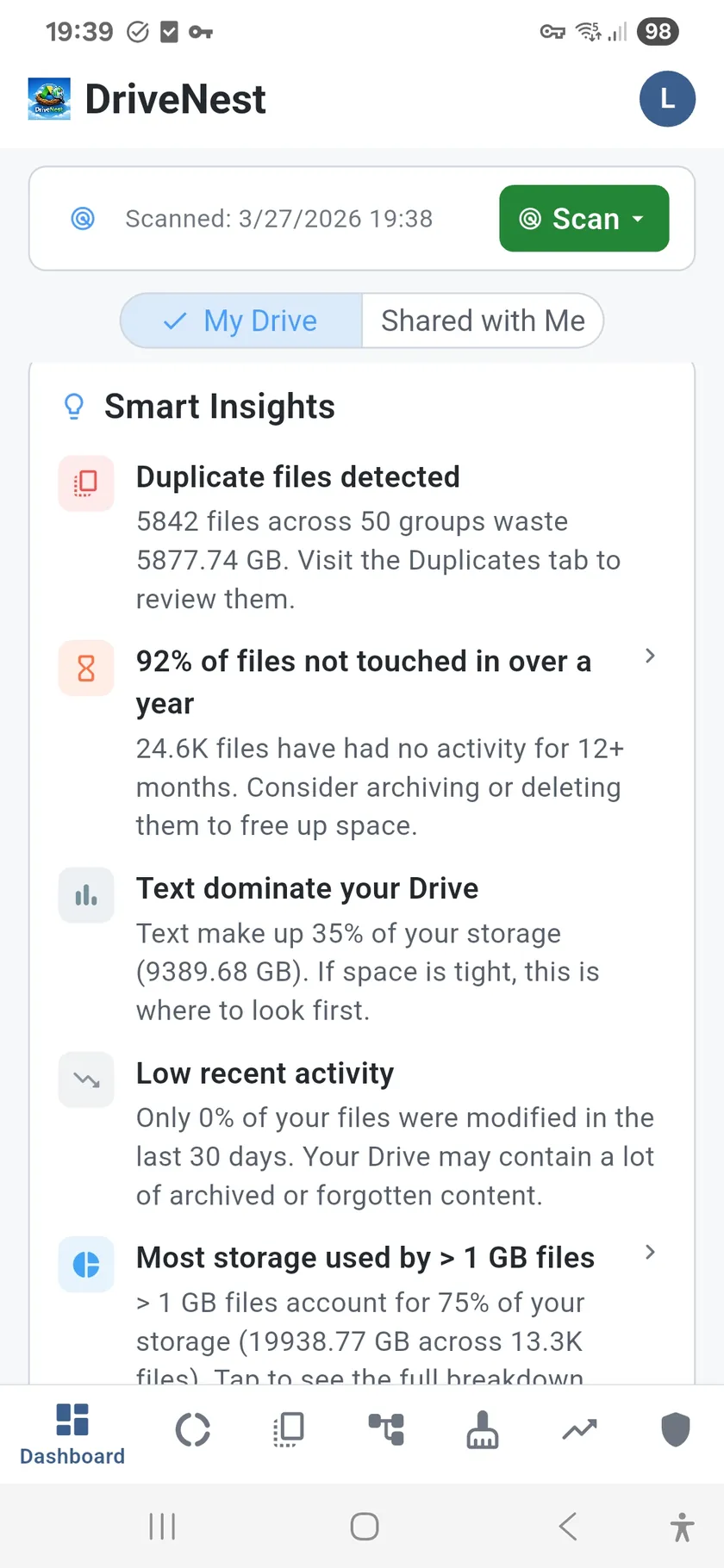
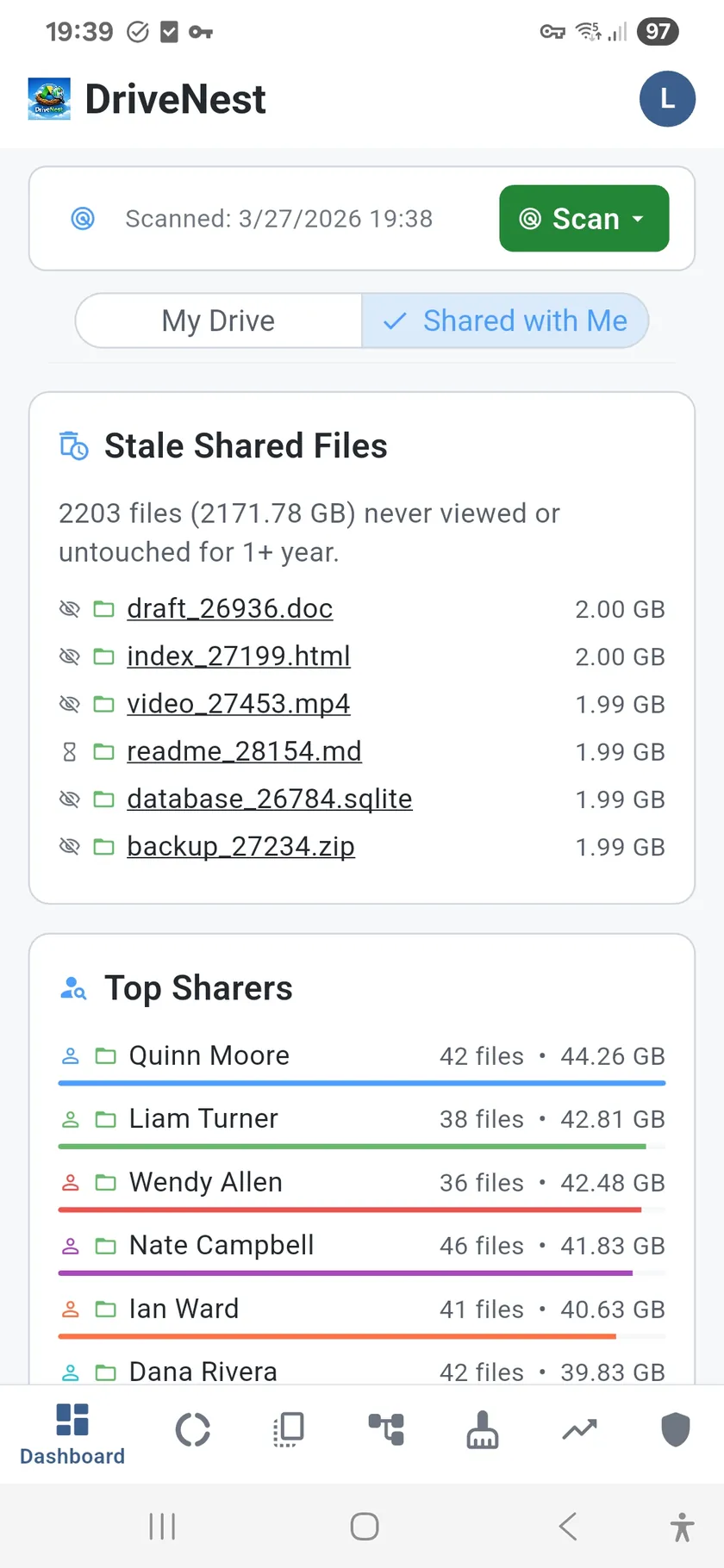
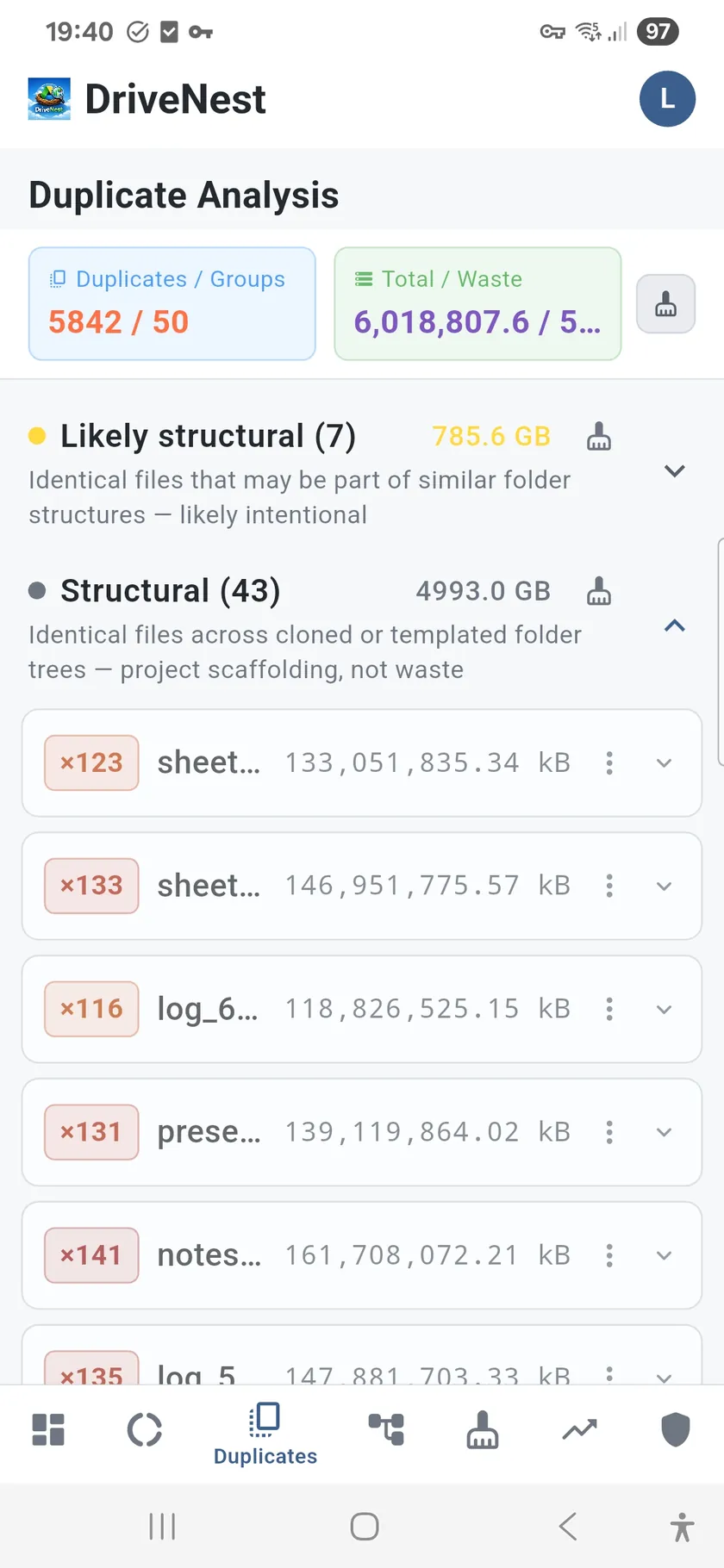
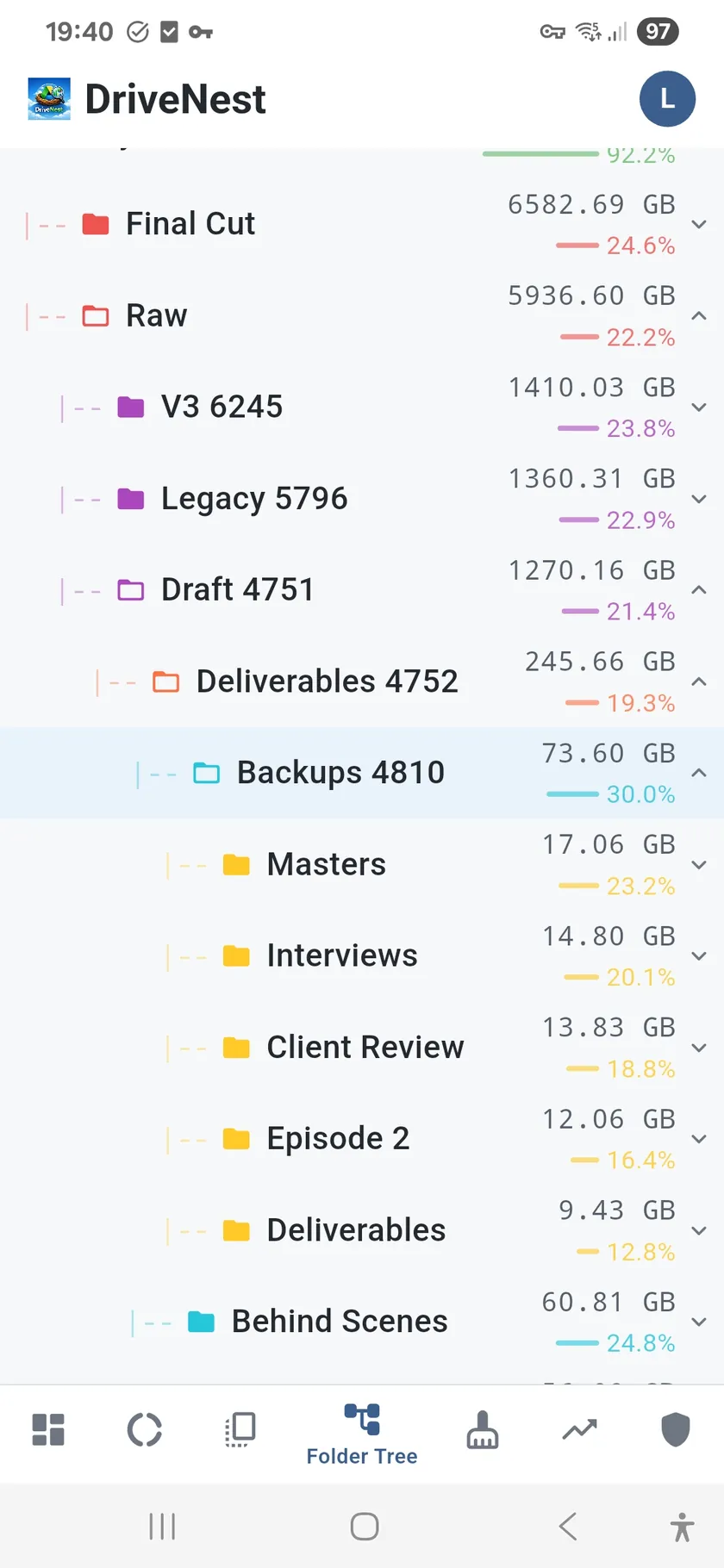
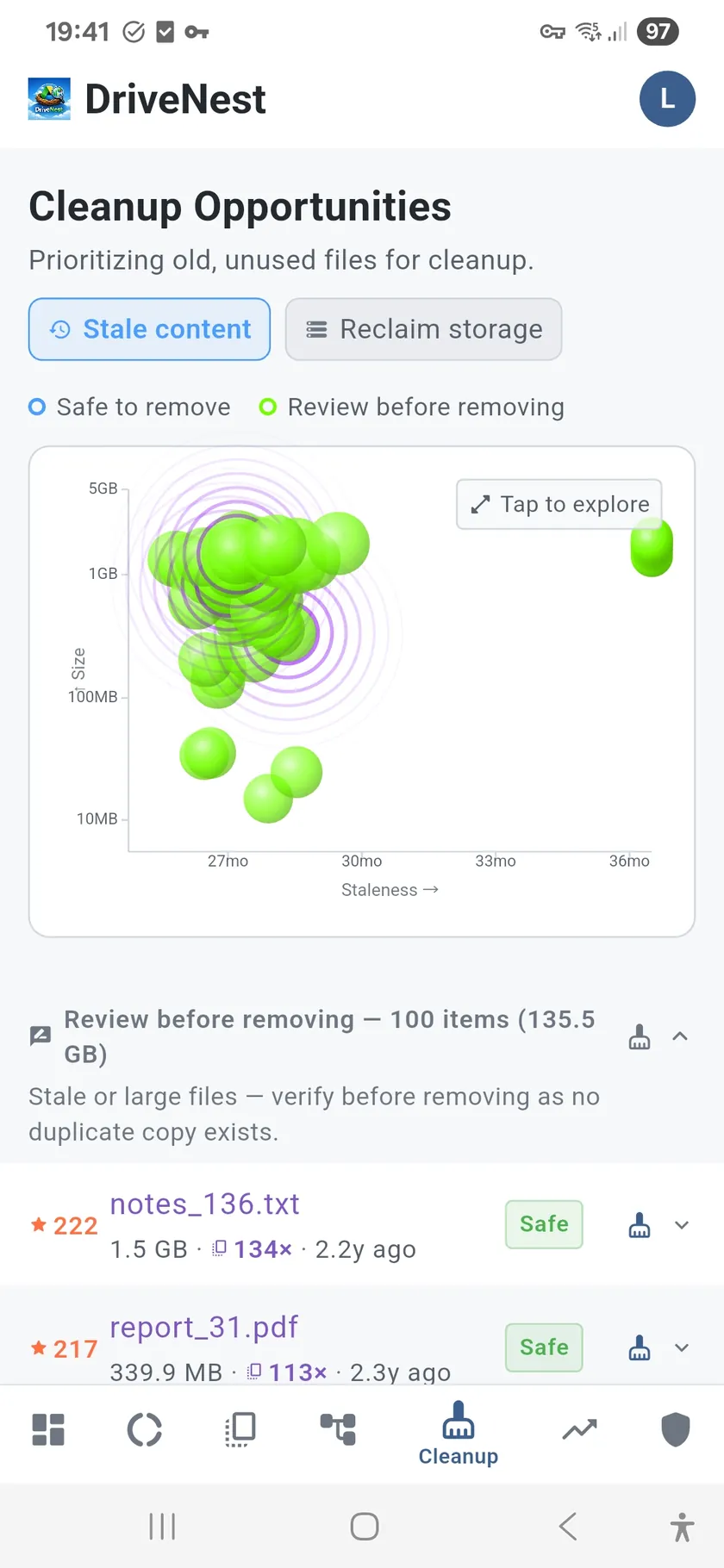
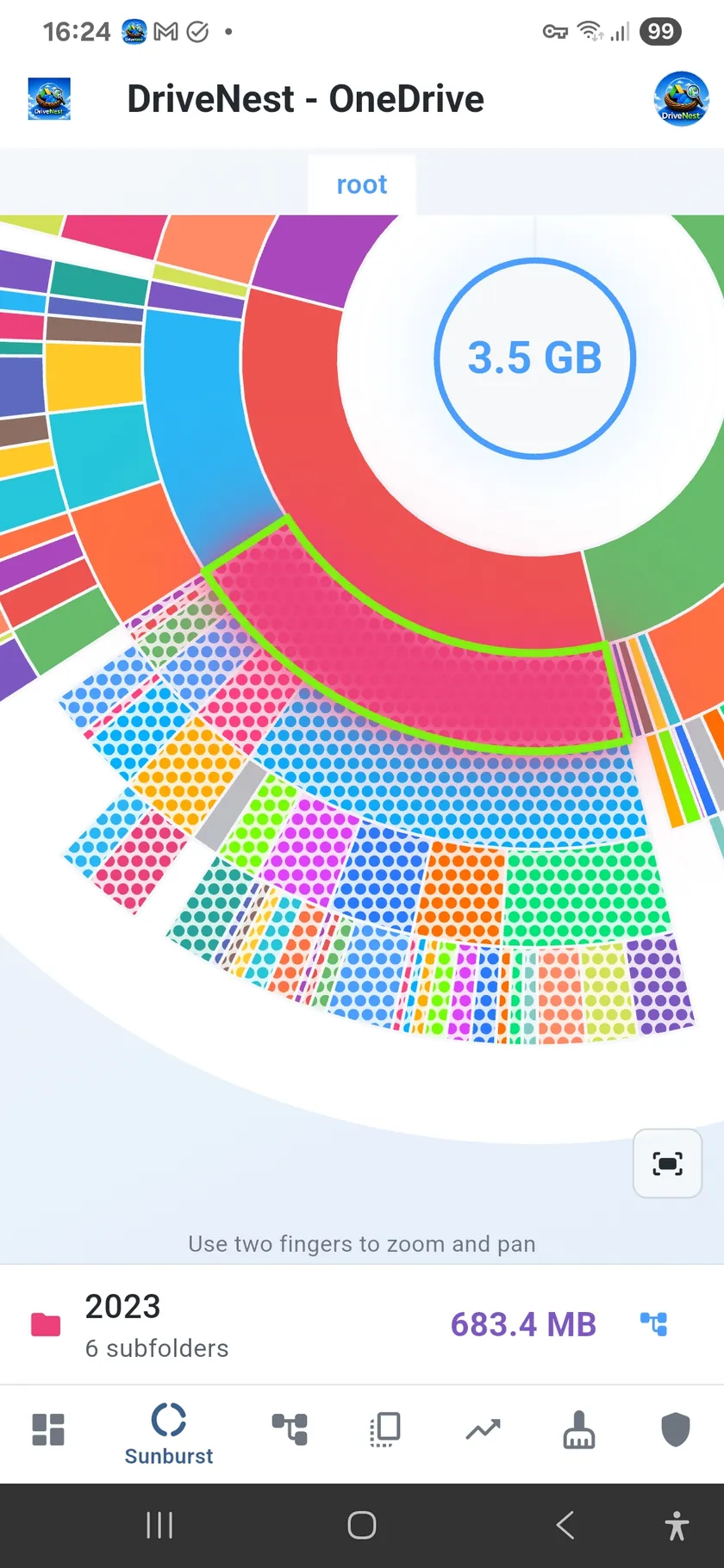
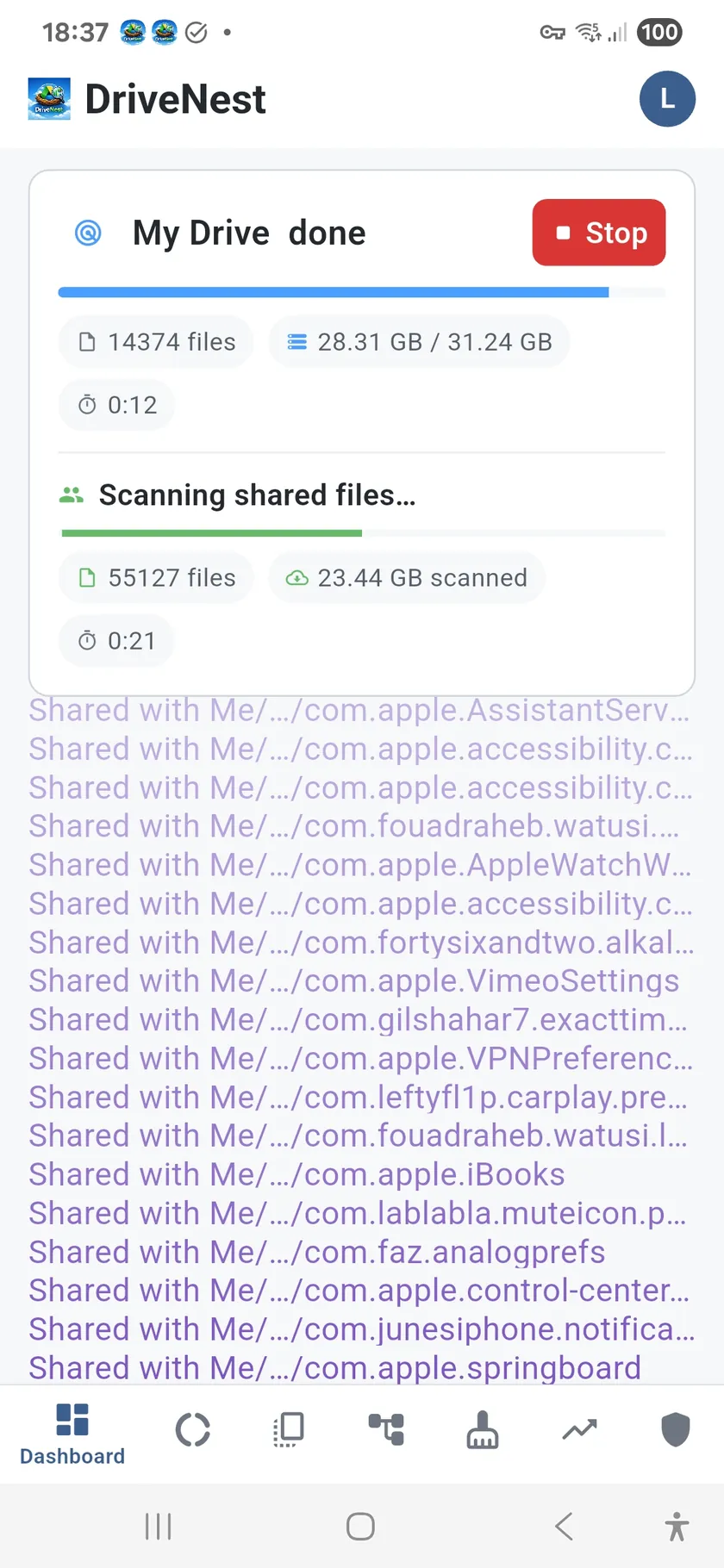
DriveNest turns a flat list of files into a clear, interactive picture of your storage. Instead of a single “you’ve used 47 GB” number, it shows you which folders eat your quota, which duplicates waste space, which files you’ve shared and forgotten, and how your storage has grown over time — then helps you safely reclaim the wasted space.

It reads only your storage metadata — names, sizes, folders, and sharing info, never the contents of your files — and runs all of its analysis on your device. Nothing is uploaded to a server, there are no ads, and nothing tracks you. On Google Drive its access is read-only and it cannot change anything at all; on OneDrive it asks for write permission only when you first approve an in-app action, and never holds it if you don’t.

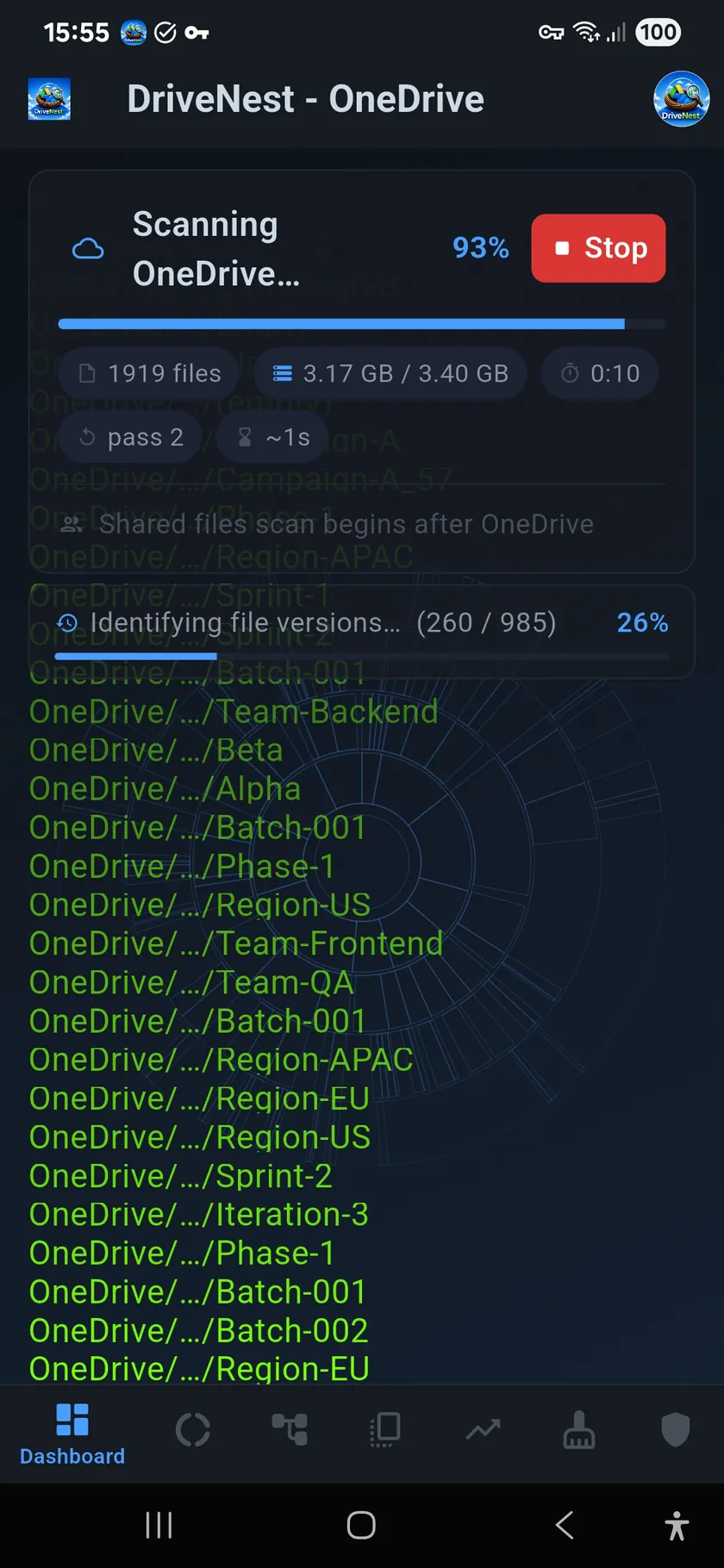
Two clouds, one app. Connect your Google account, your Microsoft account, or both. Each cloud gets its own dashboard, sunburst chart, duplicate finder, folder tree, cleanup analysis, security score, and trend history — the full feature set, not a cut-down second-class version. Your plan covers every provider you connect.

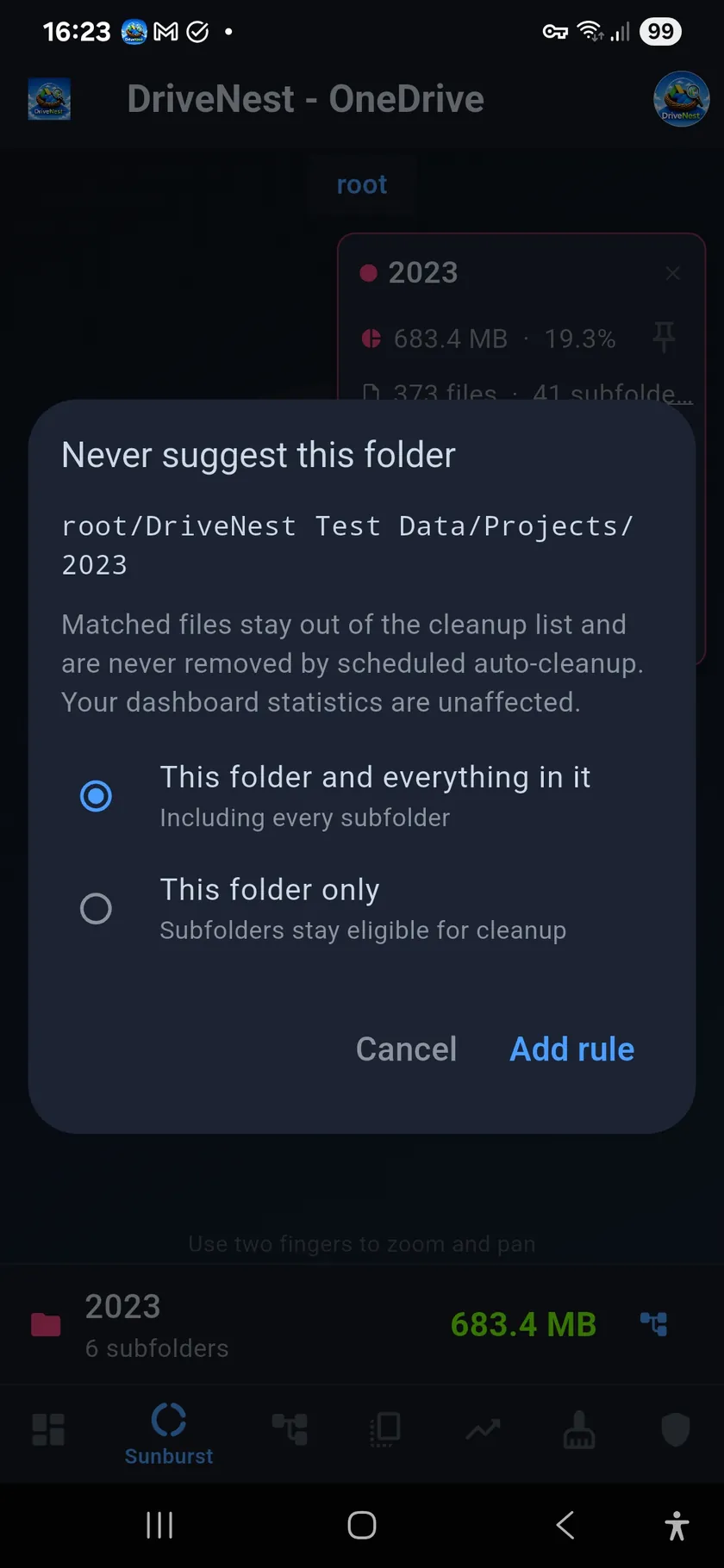
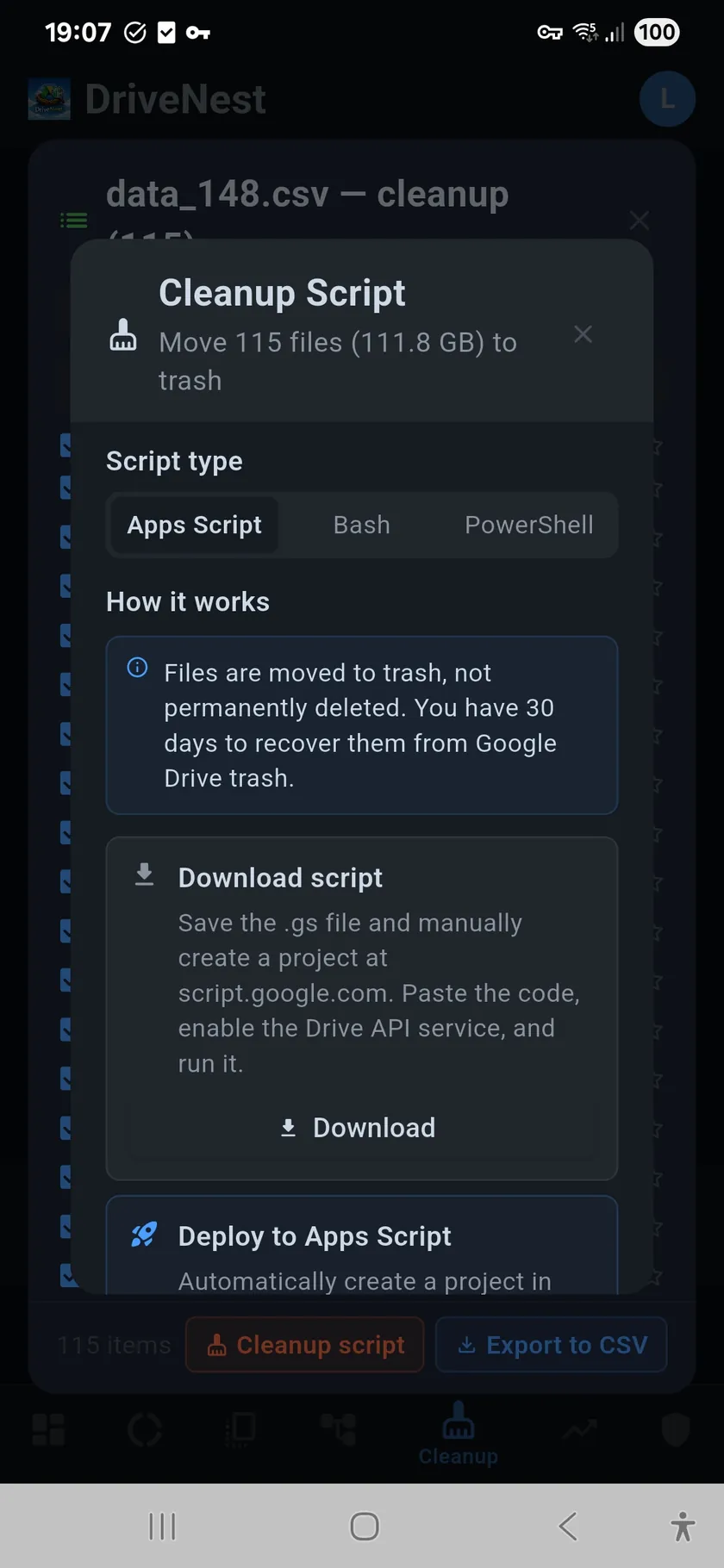
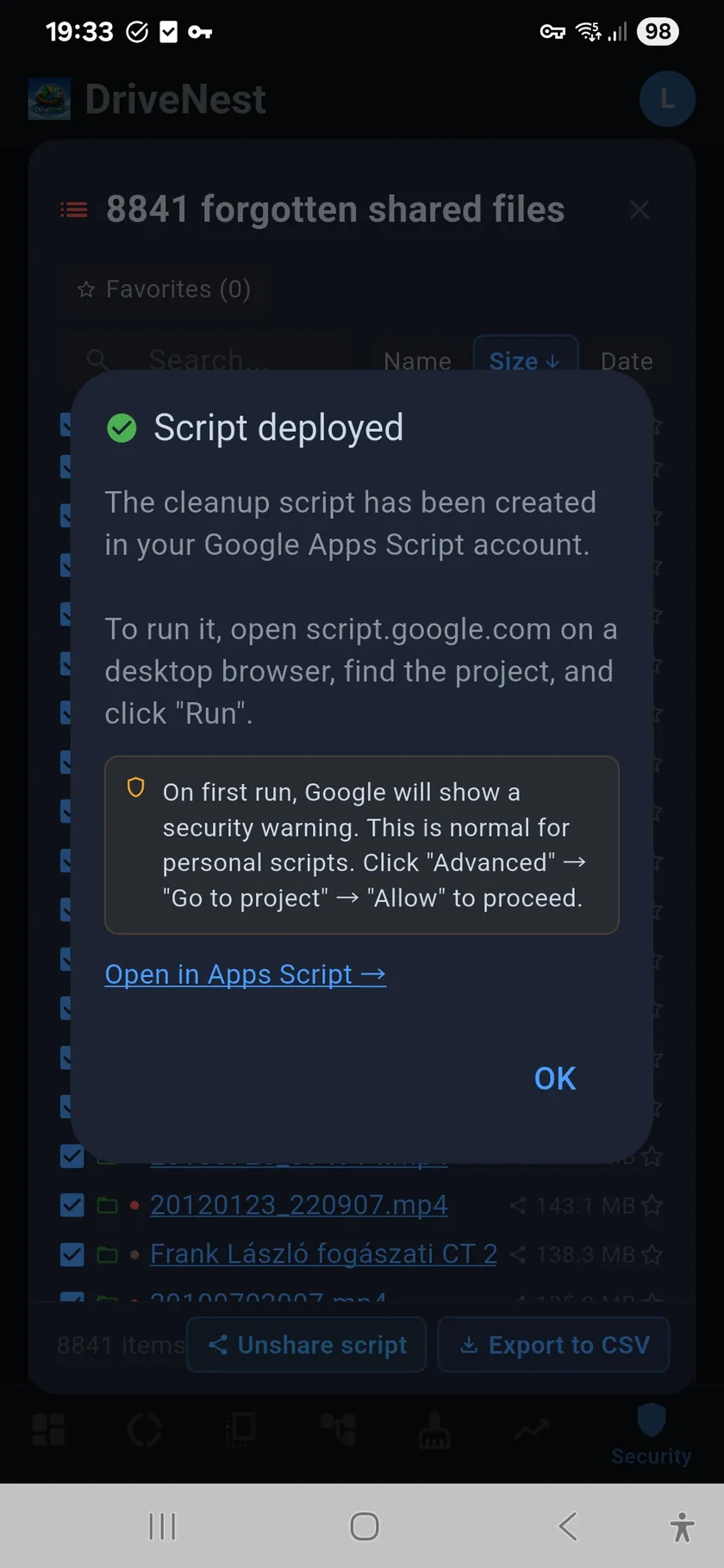
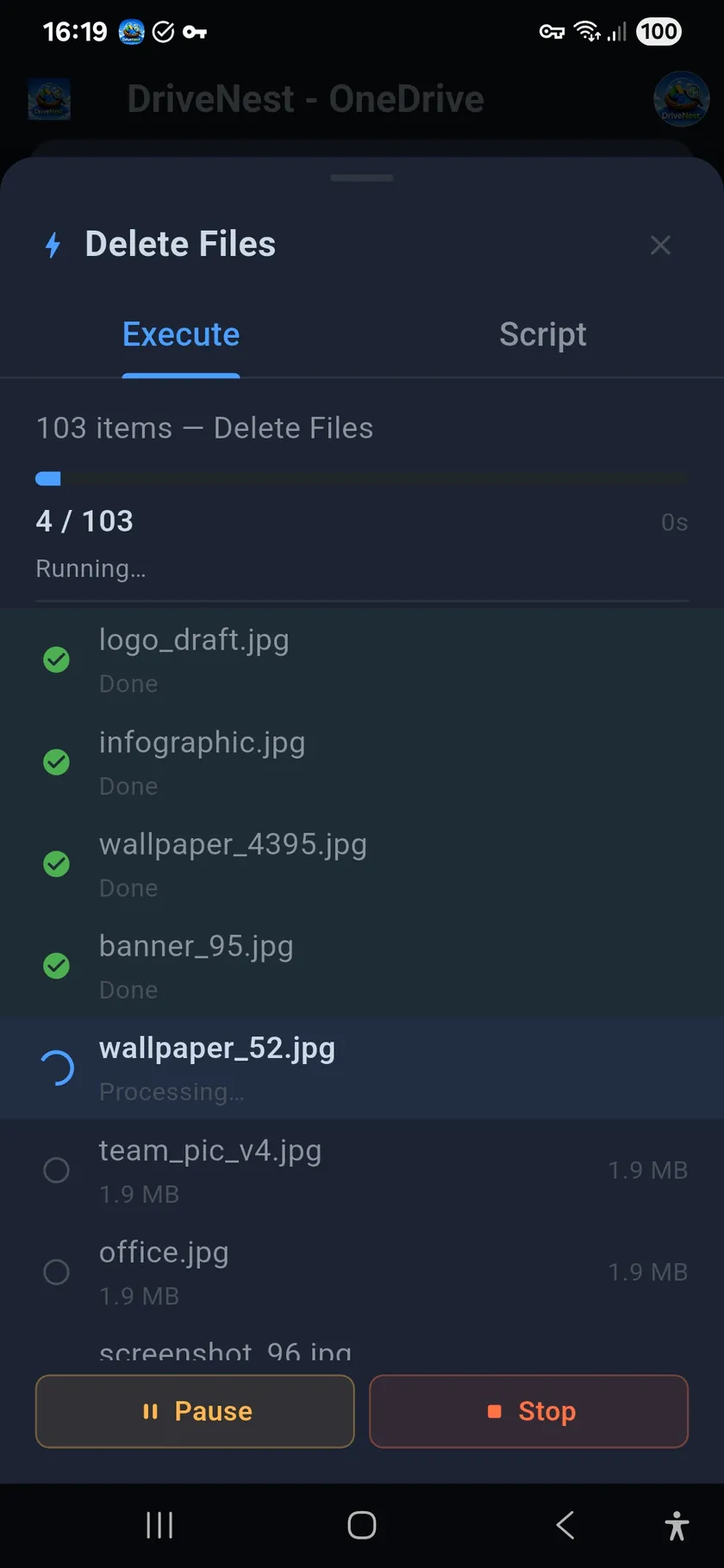
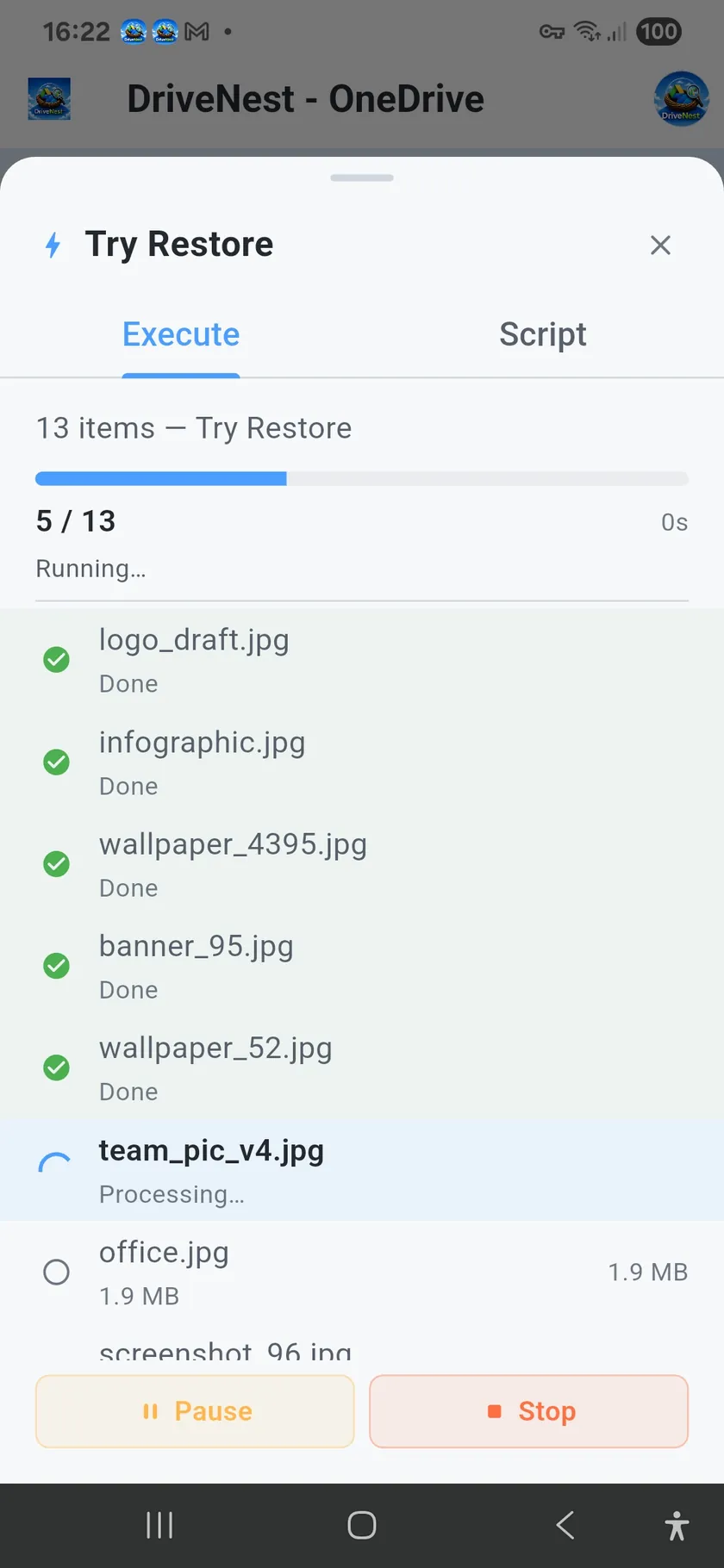
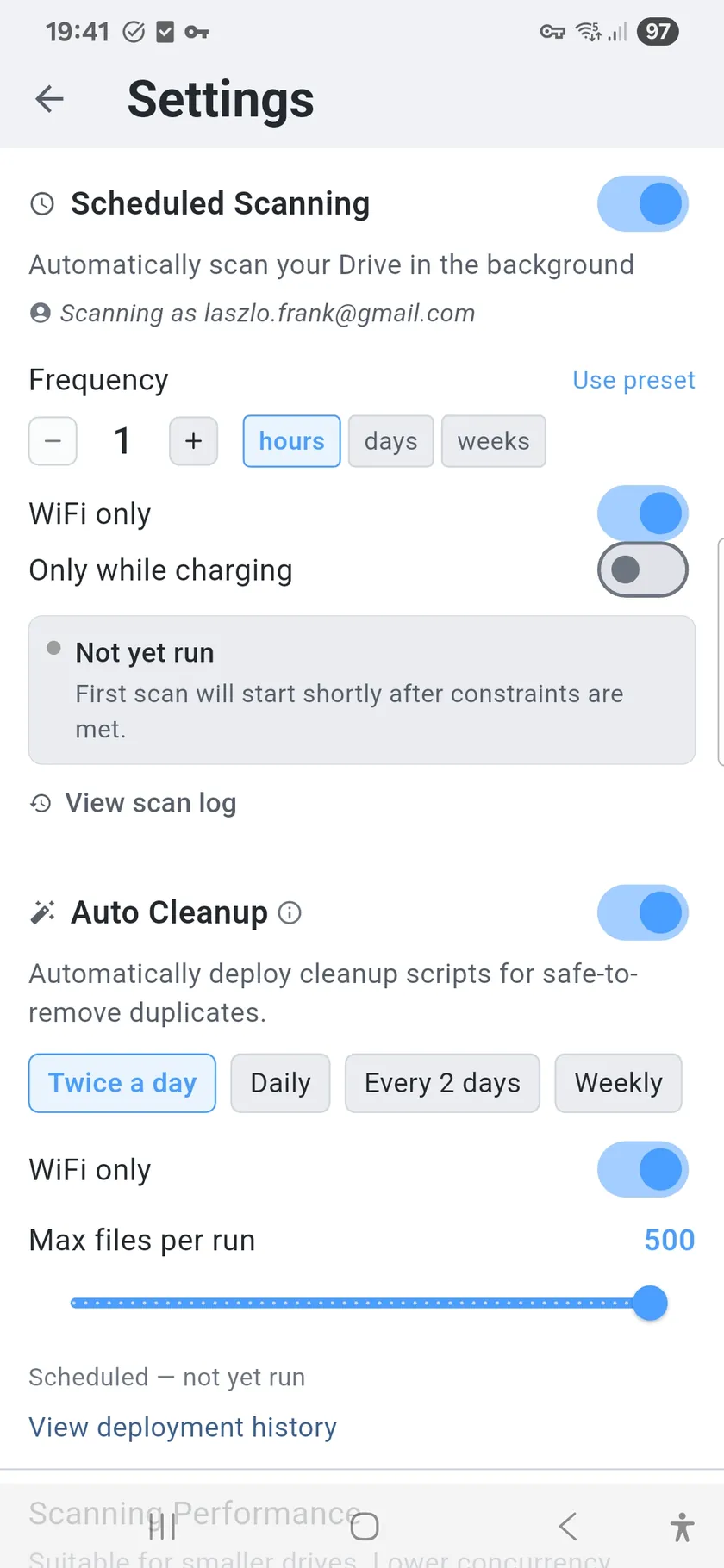
A new way to act on your files: v2 introduces in-app execution of cleanup, unshare, and version actions — a capability our users asked for repeatedly through feature requests. Where DriveNest used to only hand you a script to run elsewhere, it can now carry the action through for you, end to end. Long jobs keep running when you leave the app, show progress in a notification, and can be paused and resumed. This is OneDrive only: Google Drive keeps the established Apps Script model, where DriveNest deploys the script to your own account and you run it yourself. Either way you review every action first, and nothing ever runs silently.

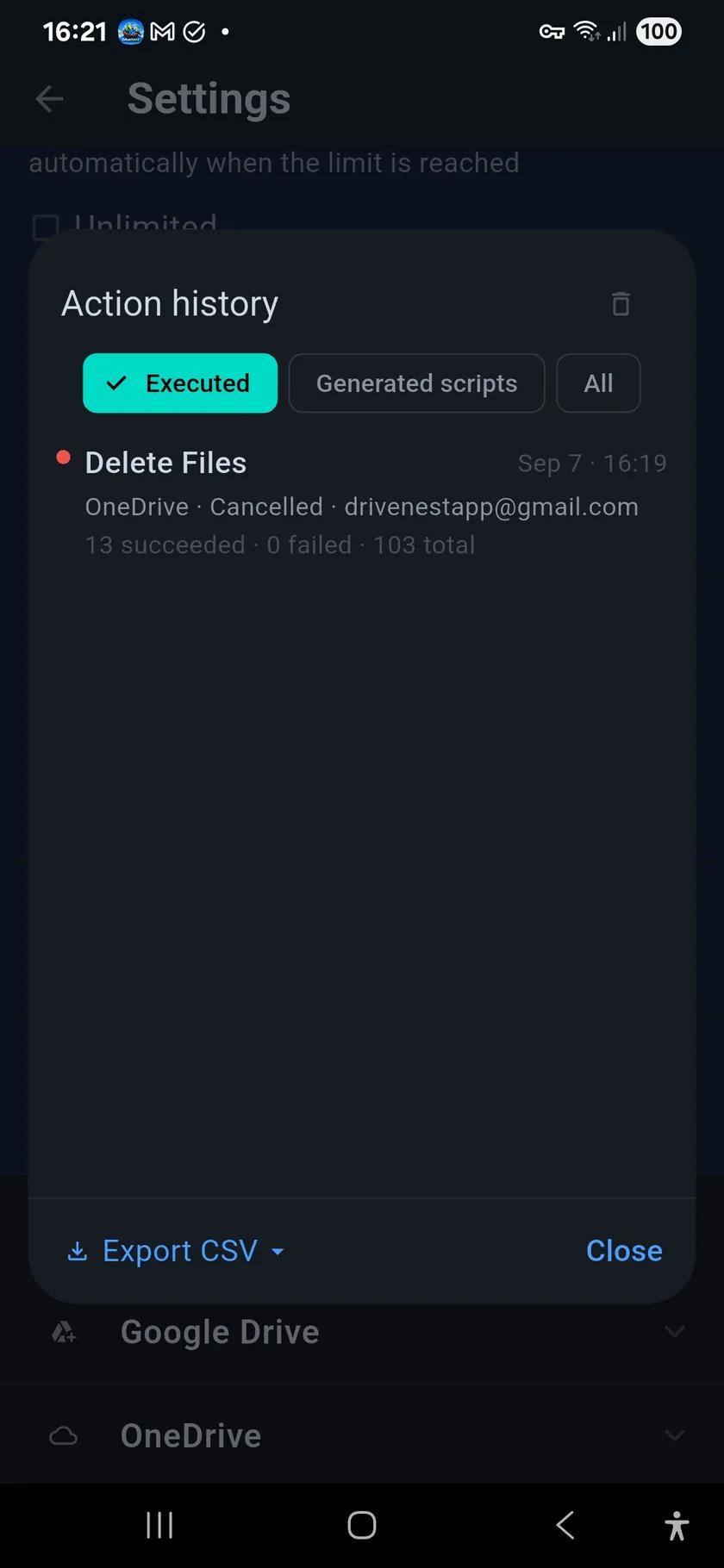
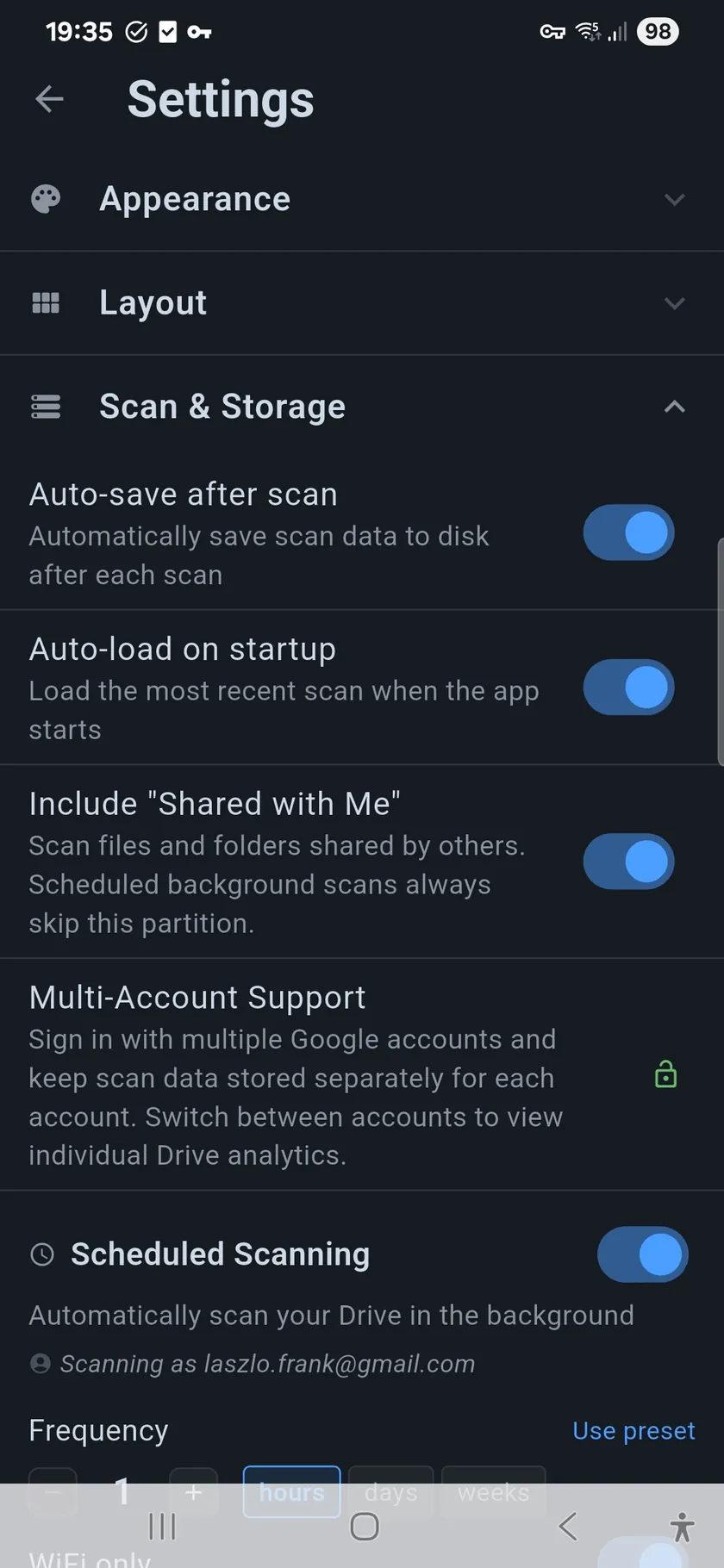
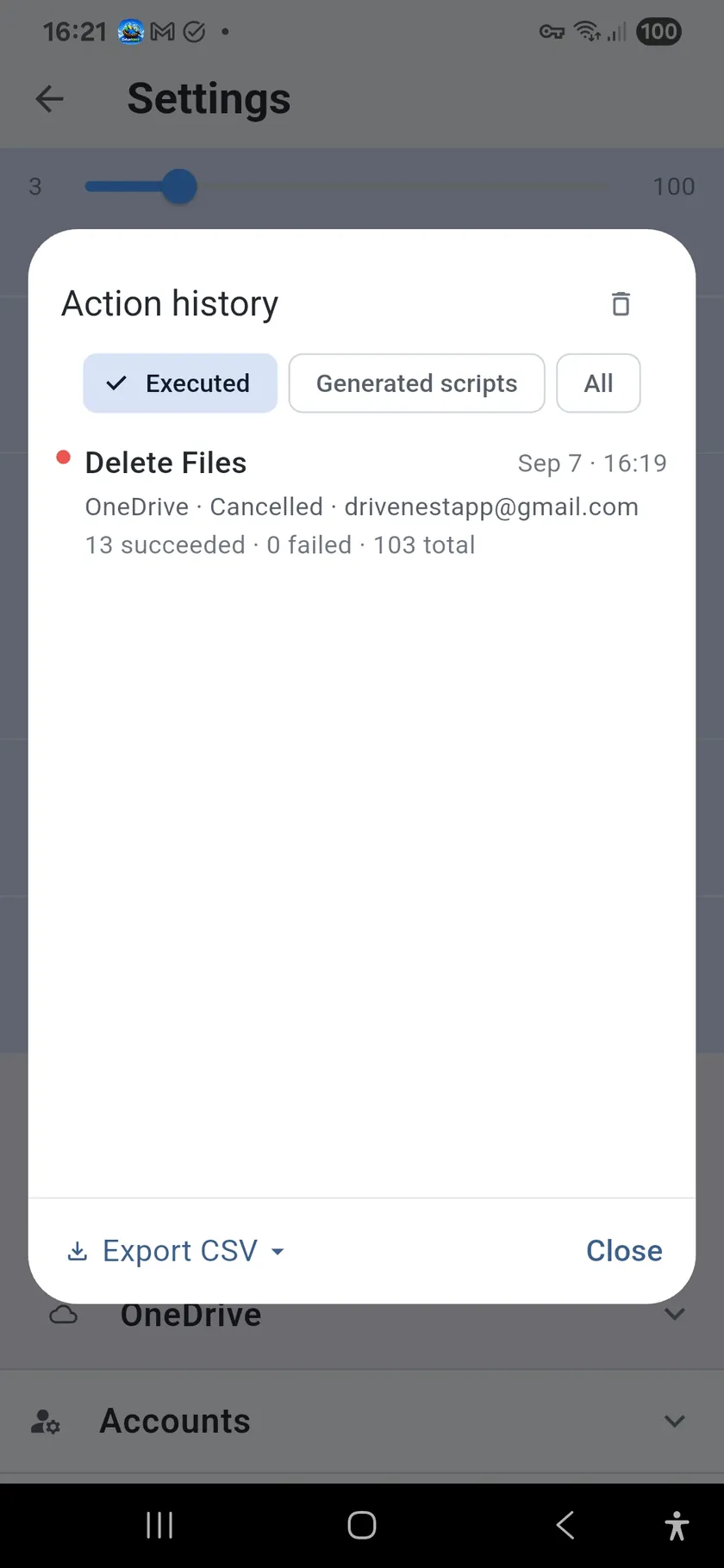
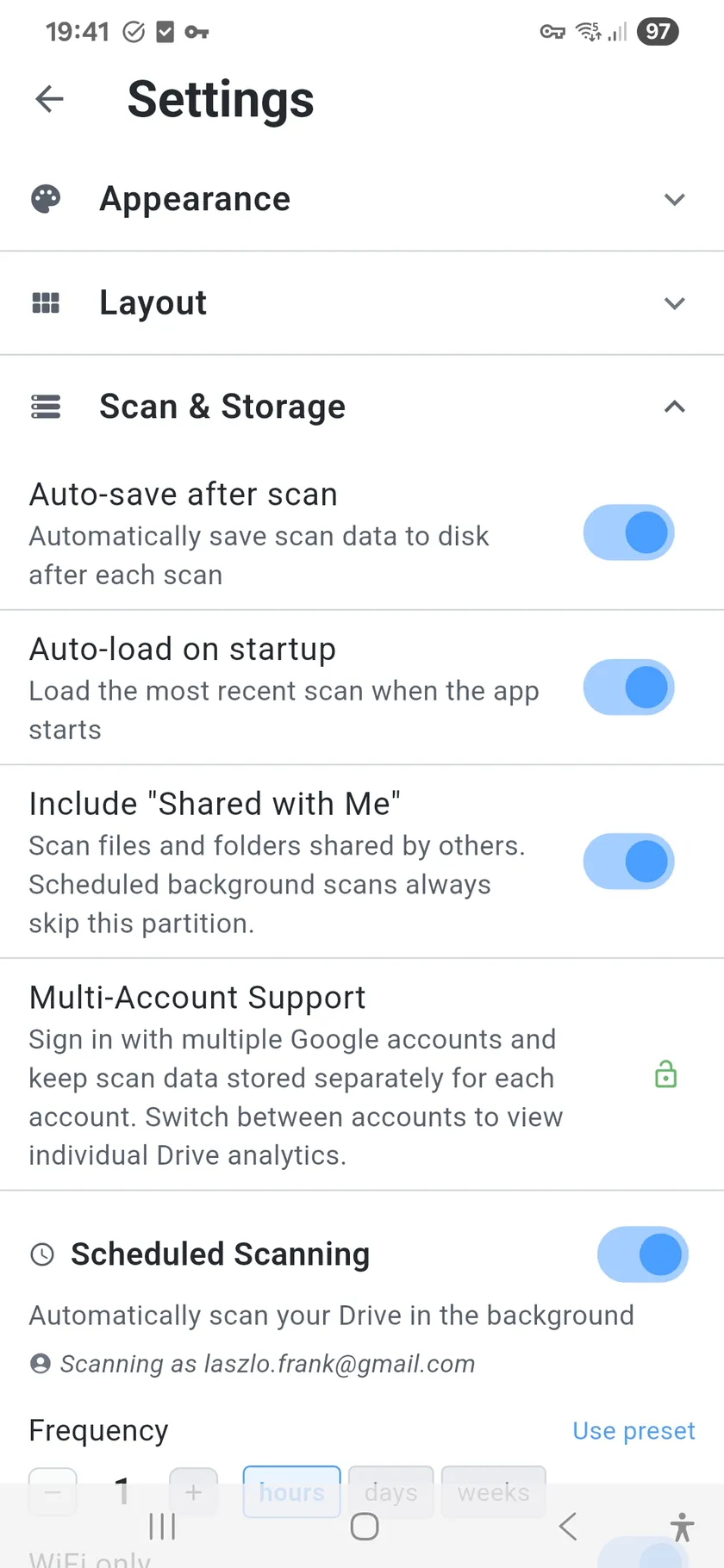
Built for the long run: v2 also adds an action log recording every script DriveNest generated and every action it executed — filterable by cloud and by kind, down to per-file outcomes — plus settings export and import so your setup moves with you to a new device, and per-provider layout customization that lets you choose which dashboard panels and navigation tabs each cloud shows.

Under the hood, DriveNest was designed as a provider-agnostic cloud storage framework — Google Drive is simply the first provider it speaks to, OneDrive is the second, and Dropbox is coming next, bringing the same analysis, security audit, and safe cleanup tools to every cloud you use, from one app.

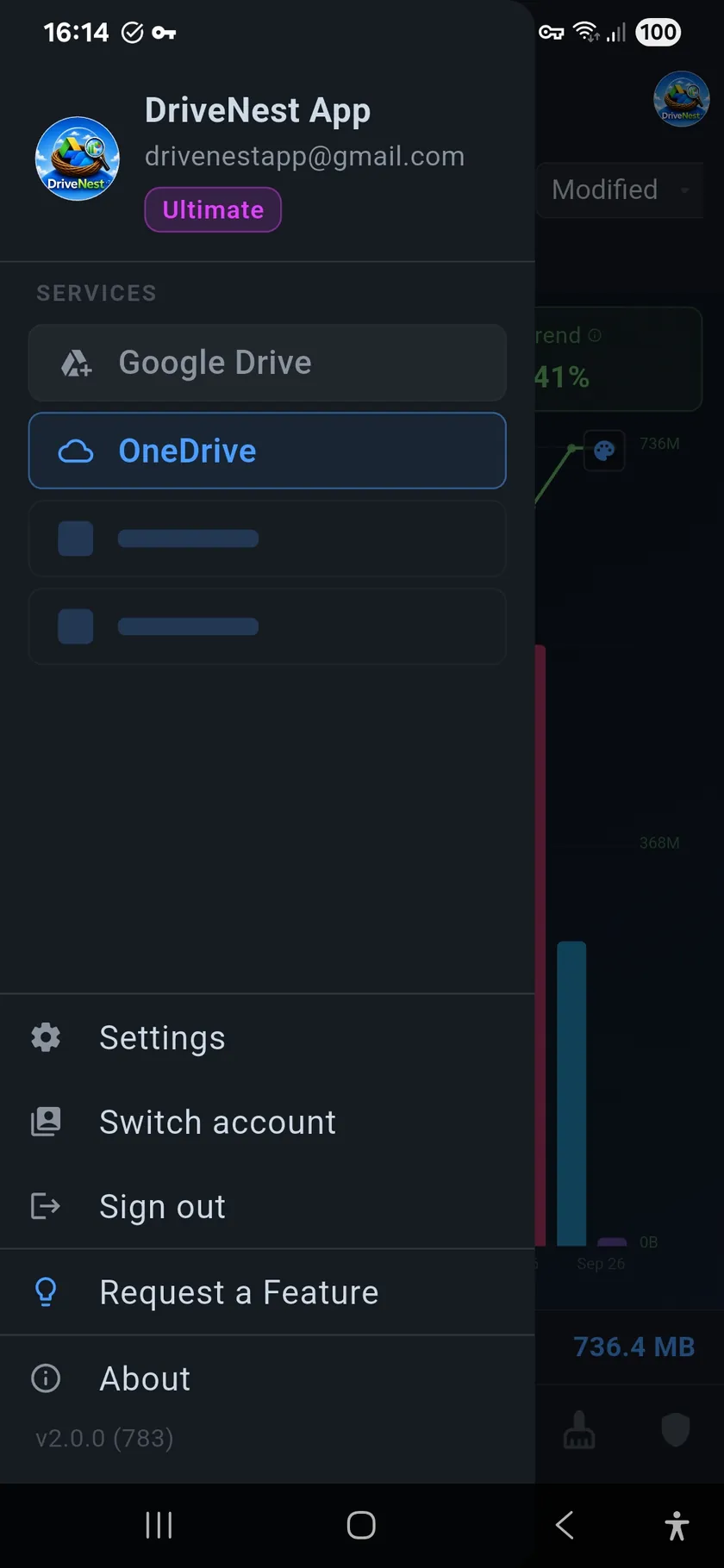
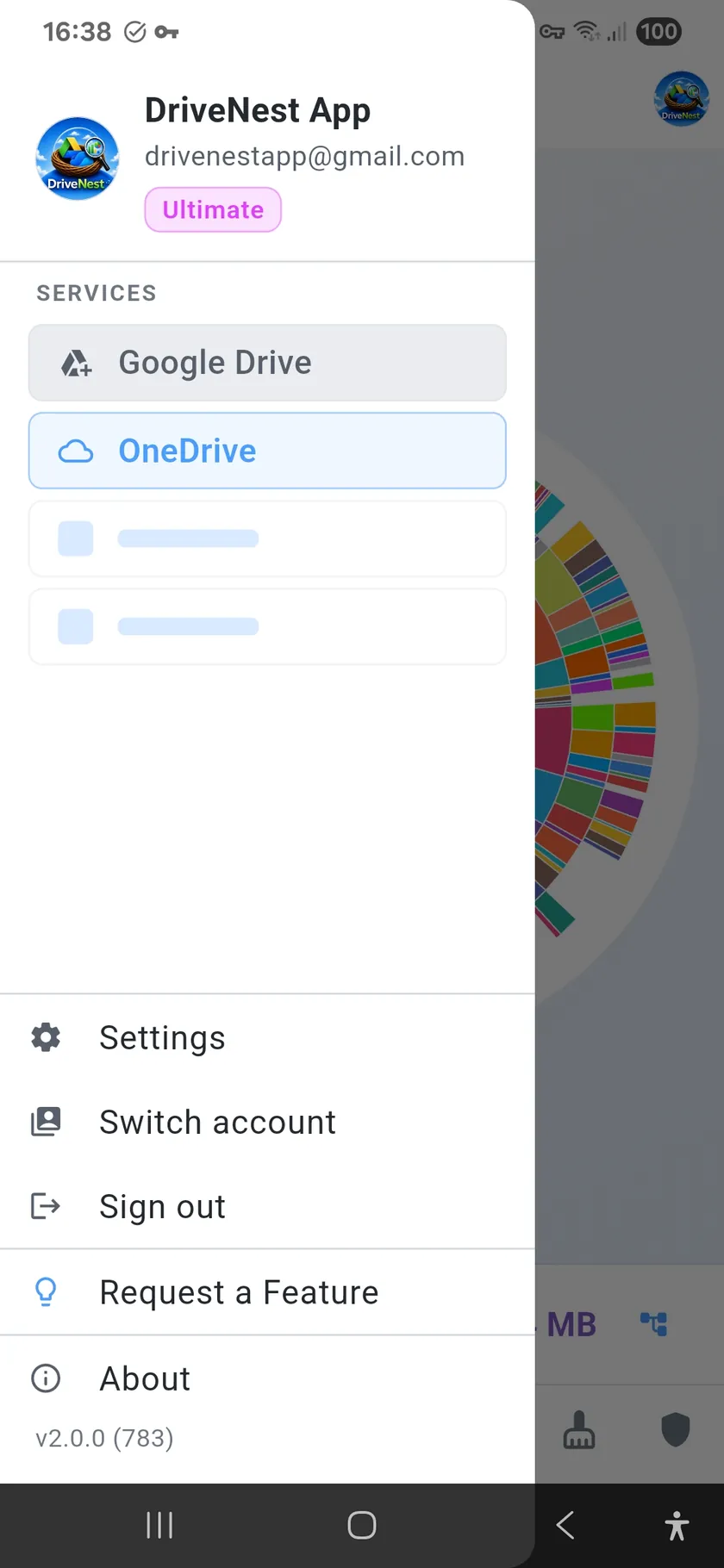
DriveNest drawer listing Google Drive and OneDrive as connected services — dark theme DriveNest drawer listing Google Drive and OneDrive as connected services — light theme

Both clouds live in the same drawer

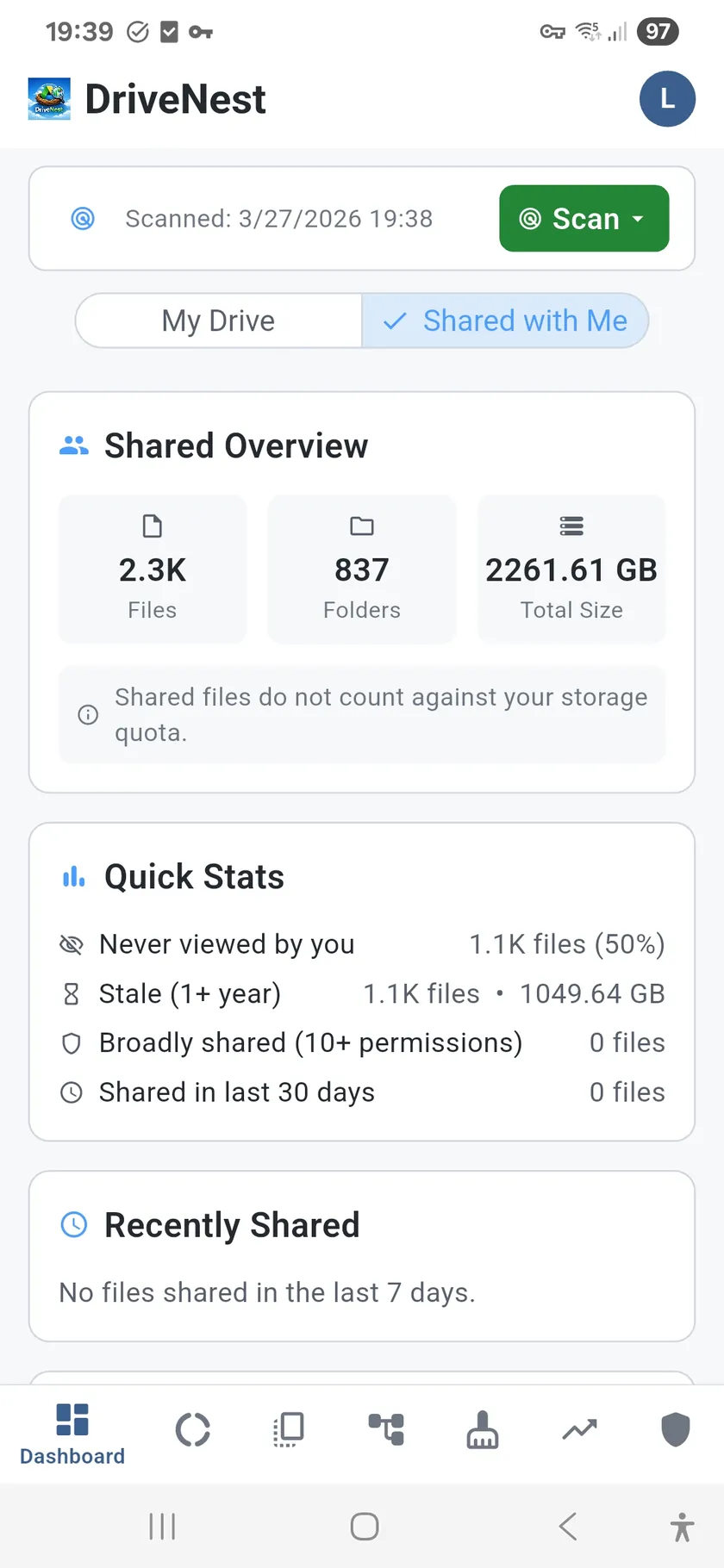
Open the menu and your storage providers sit side by side under Services: Google Drive and Microsoft OneDrive, both fully supported since version 2. Tap one to switch — the whole app follows, with that cloud’s own scan data, dashboard, charts, cleanup analysis and security score.

Neither provider is a bolt-on. Both get the complete feature set, and one subscription covers every cloud you connect — you are not billed per provider. Sign in with one account or with both; DriveNest keeps them cleanly separated rather than merging them into one blurred total.

That is the point of the architecture underneath: DriveNest is a provider-agnostic storage framework, not a Google Drive app with OneDrive stapled on. Google Drive was the first provider it learned to speak to, OneDrive is the second, and Dropbox is next — each one slotting into the same drawer.

Stop guessing. Start understanding.

Your storage provider tells you one number. DriveNest gives you visibility, reclaim, protection, and tracking.
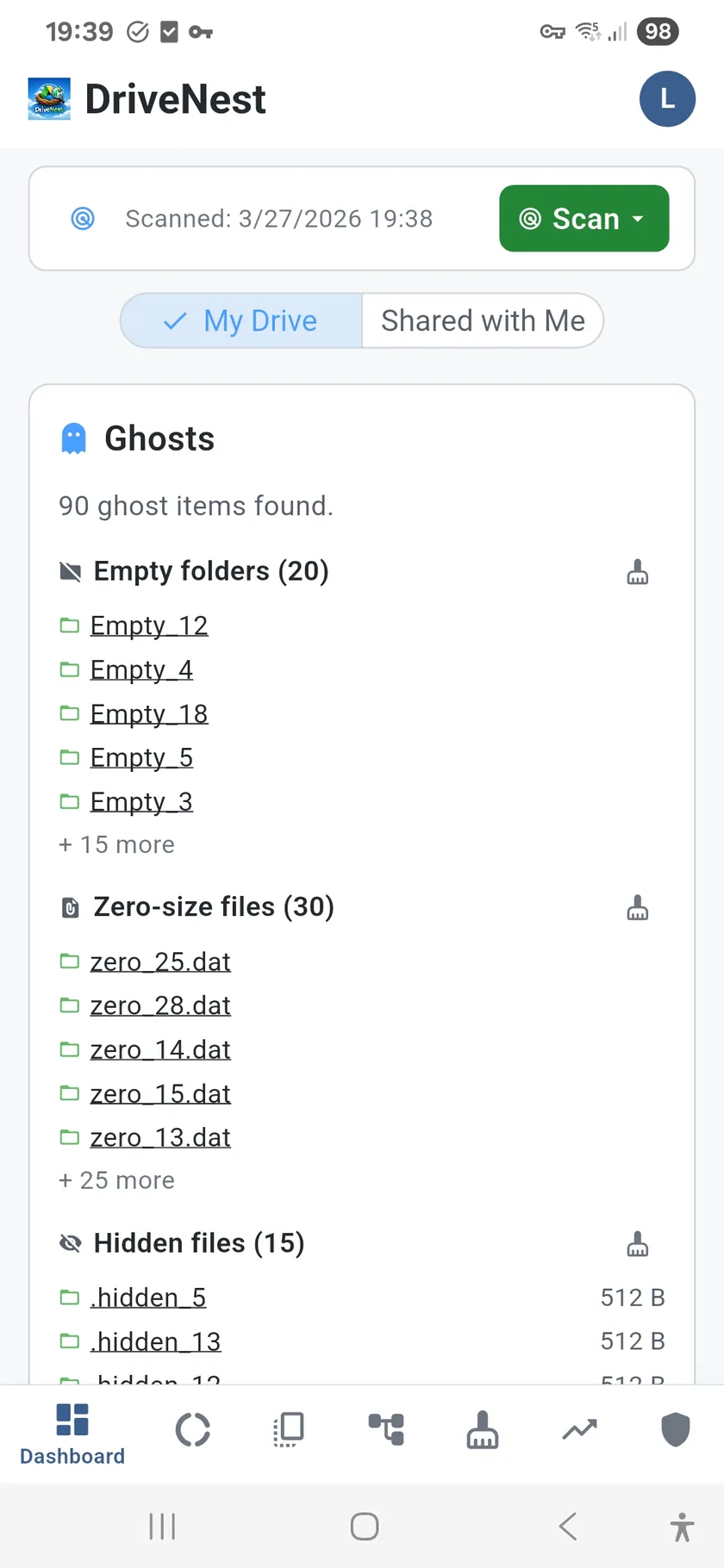
What your storage provider shows you vs. what you're missing

Google Drive and OneDrive each give you a storage bar. Here's what DriveNest reveals behind it.
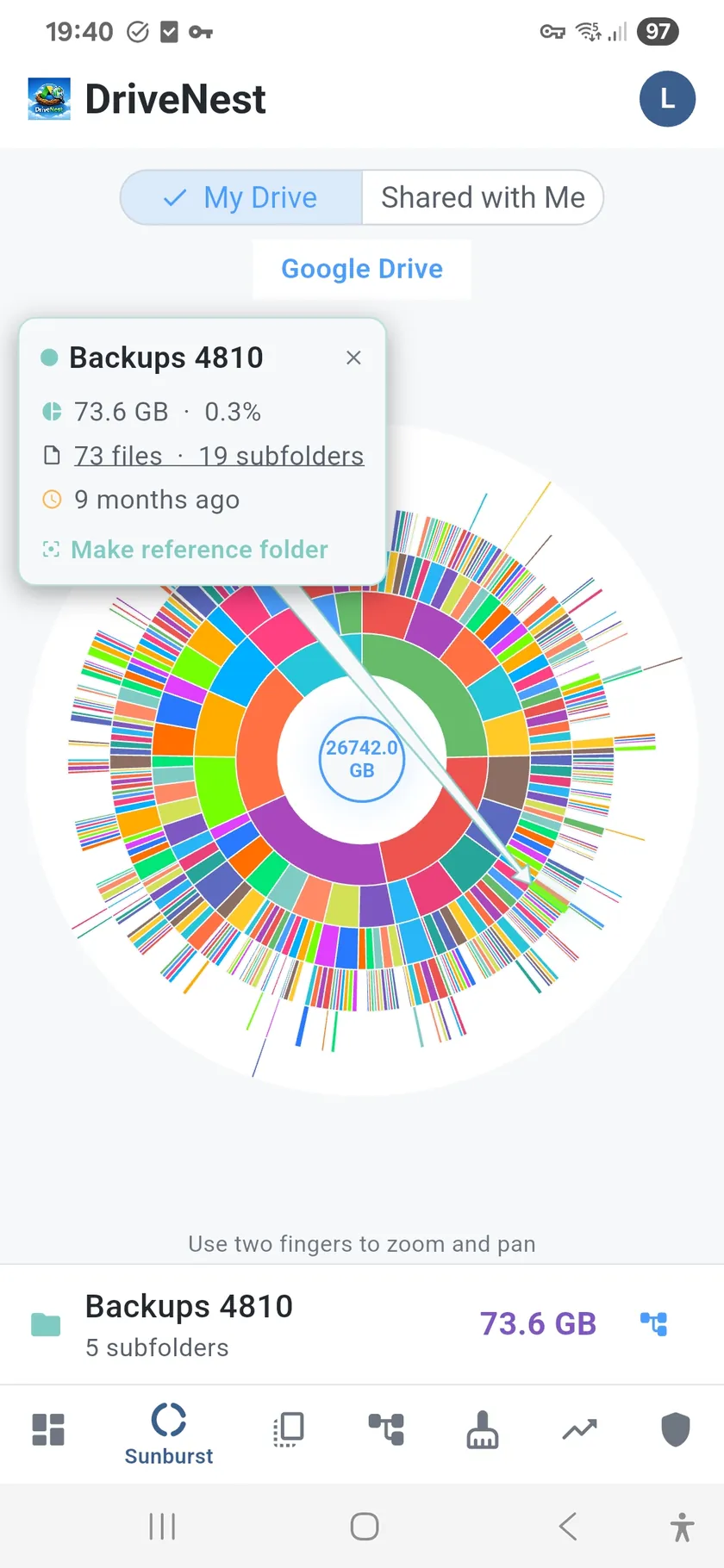
Google Drive and Microsoft OneDrive tell you how much space is used. DriveNest tells you why — and gives you the tools to fix it.

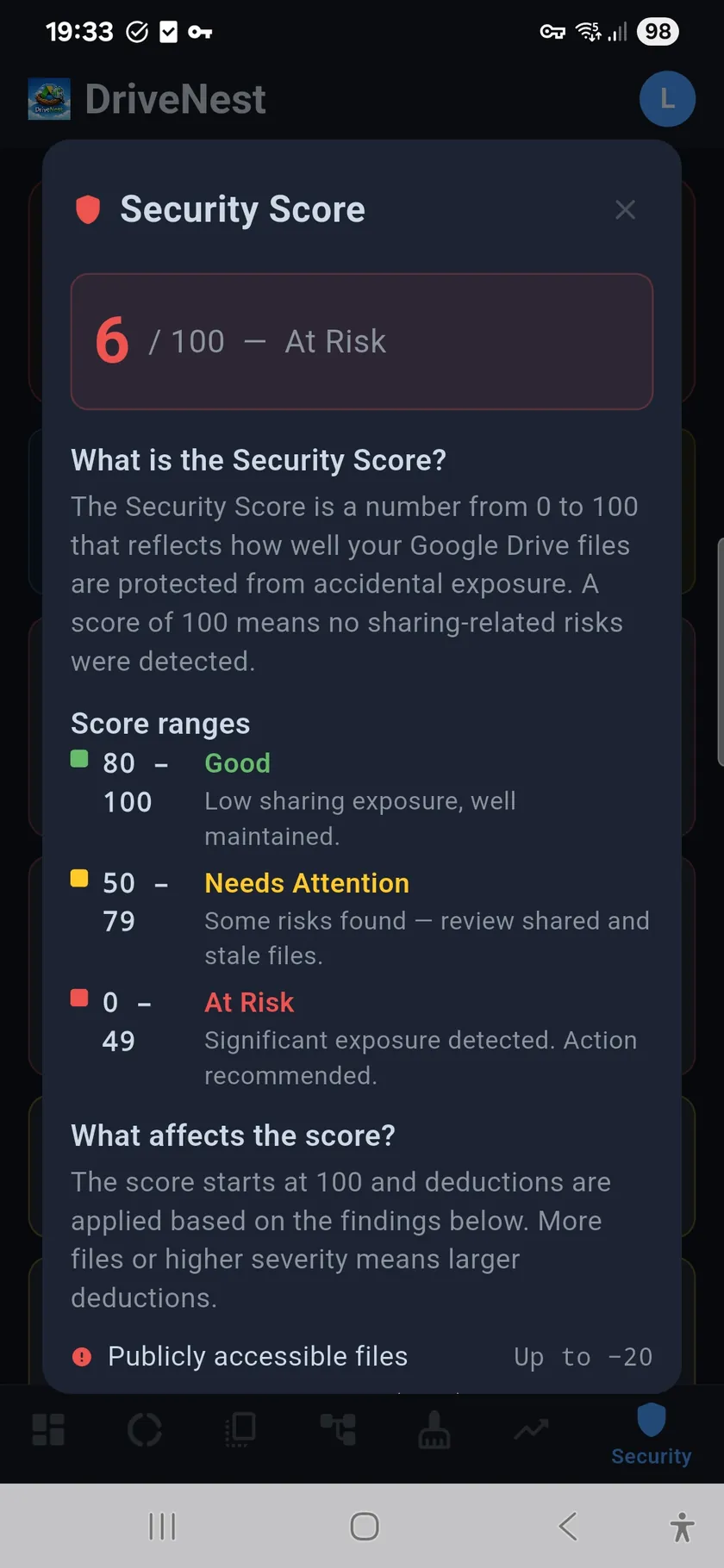
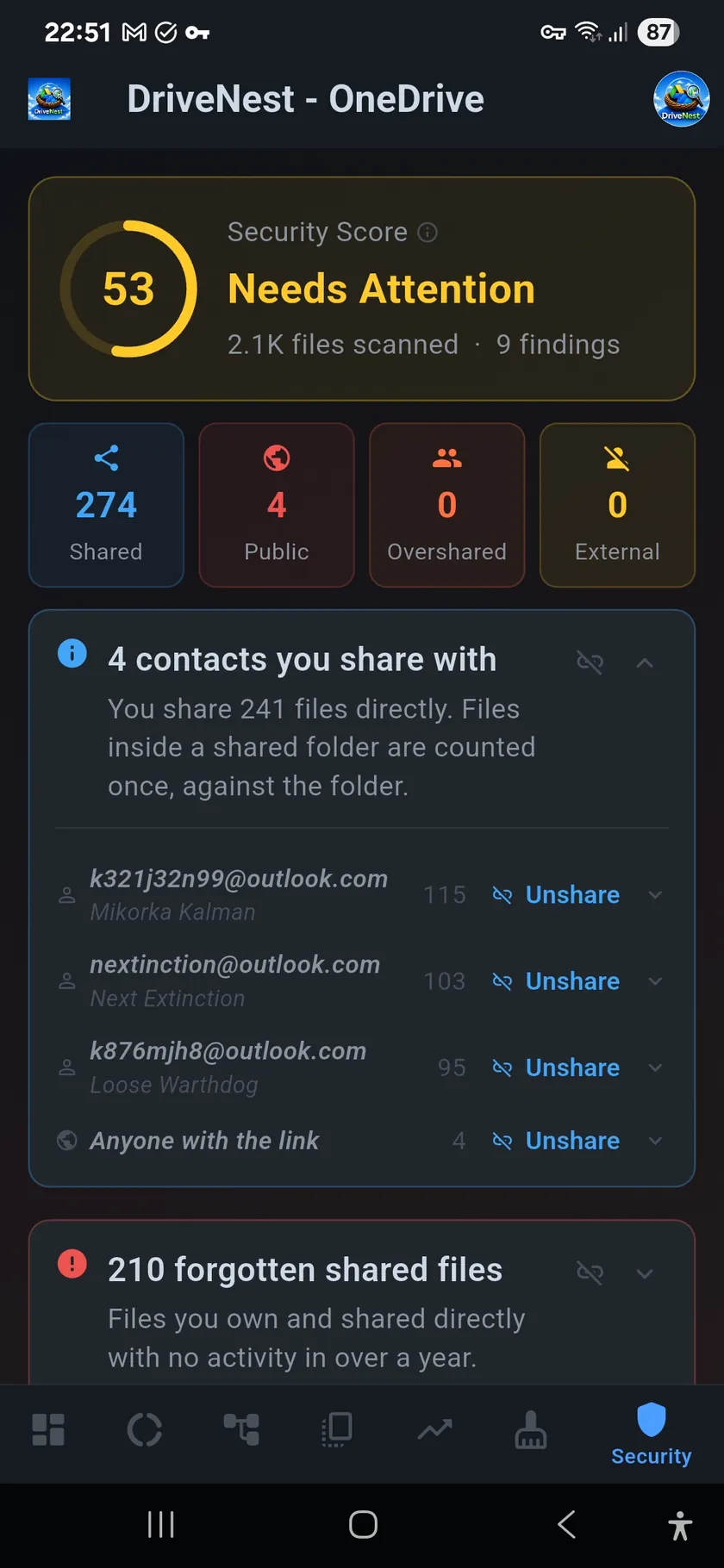
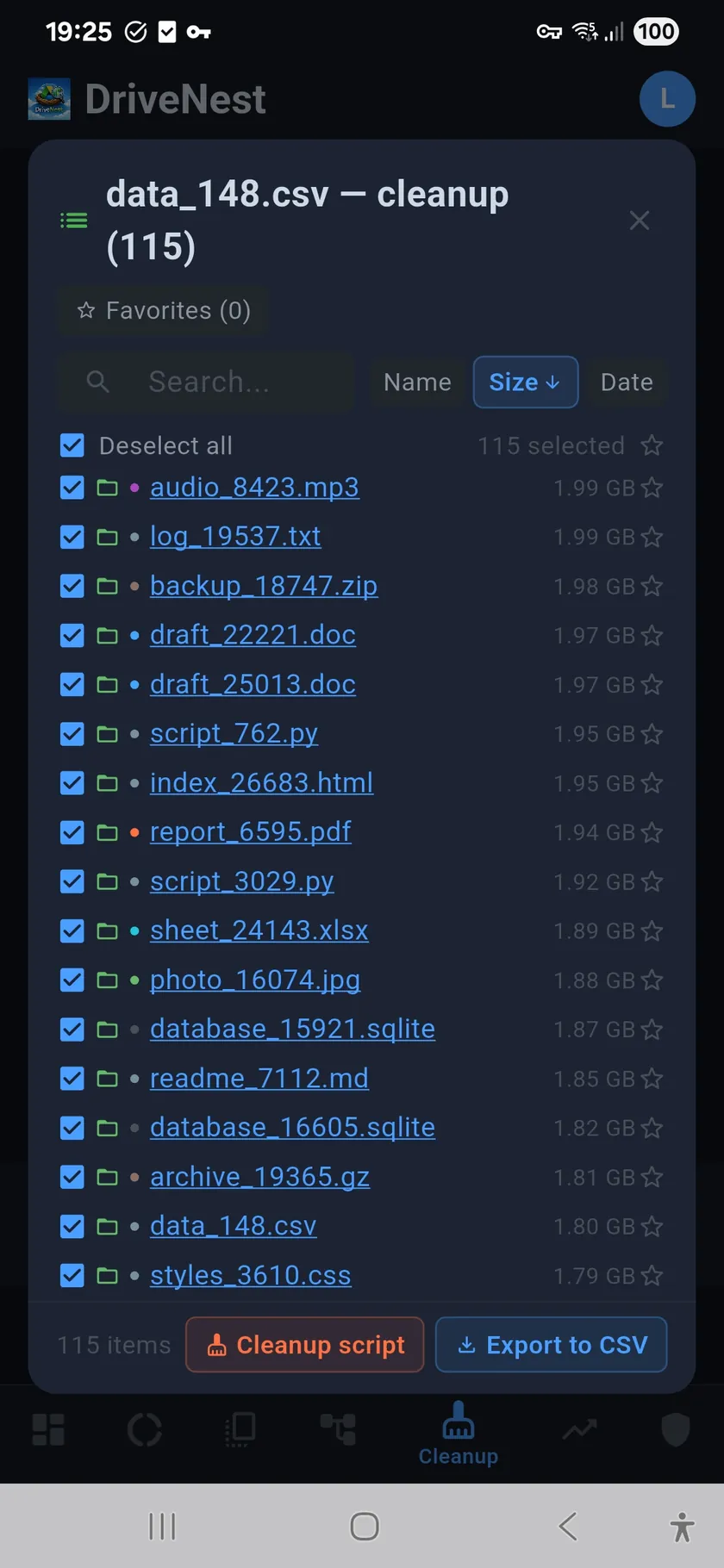
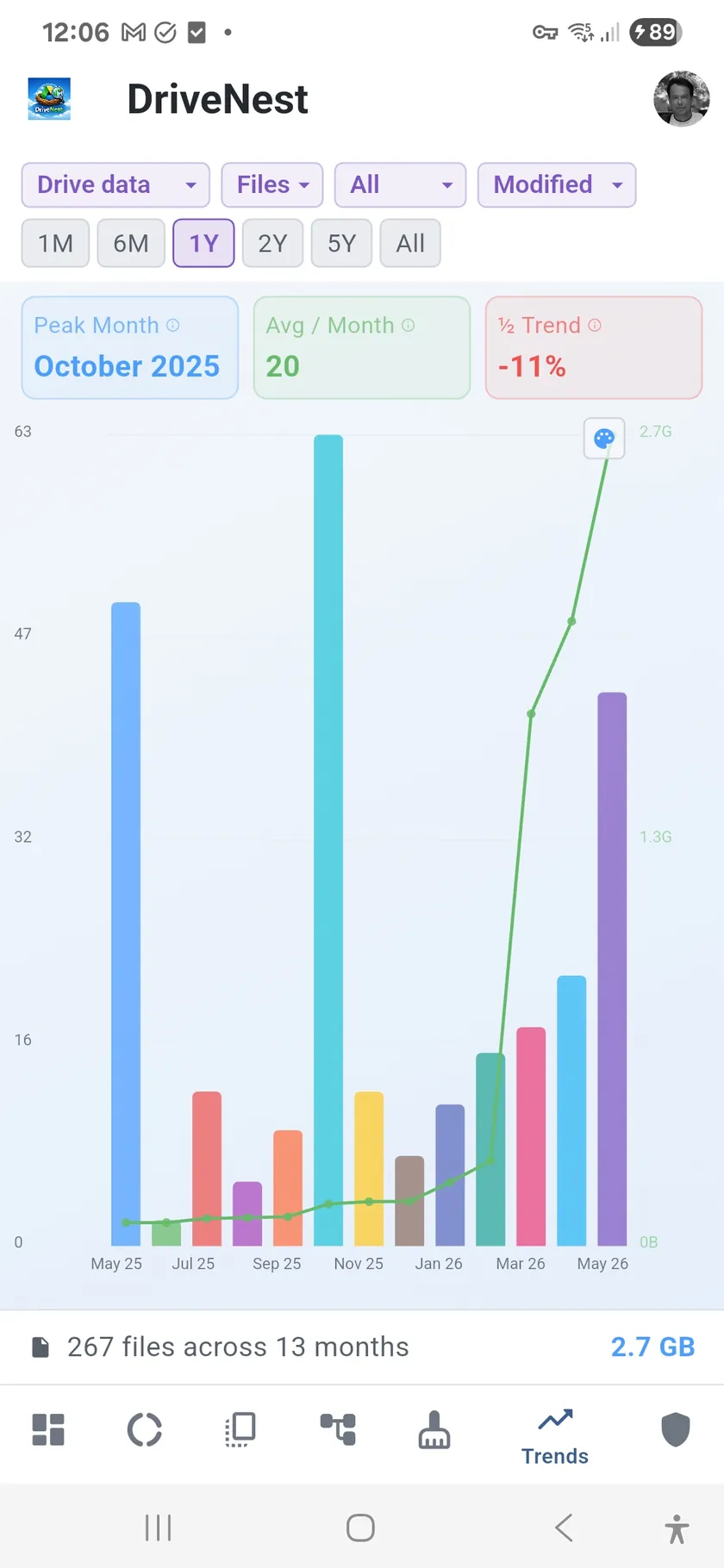
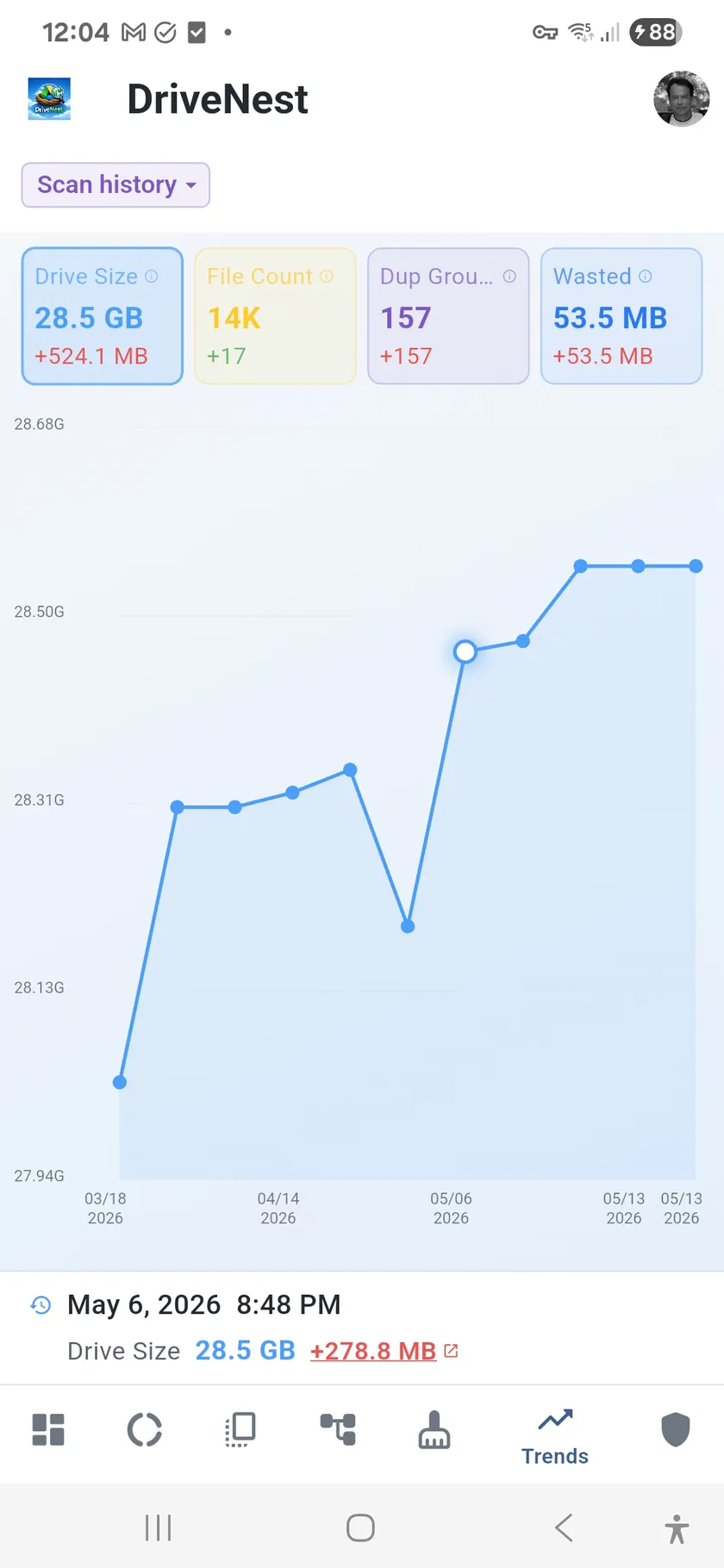
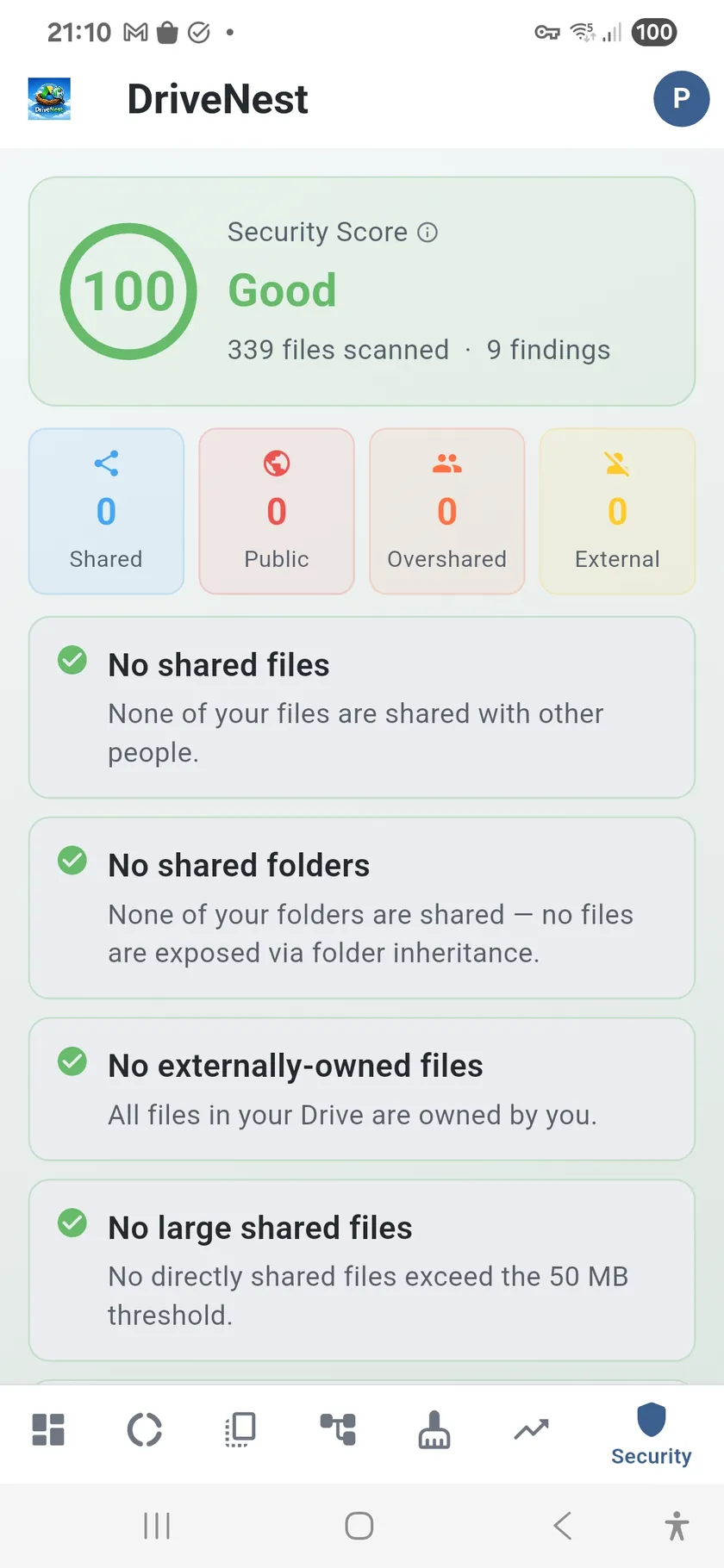
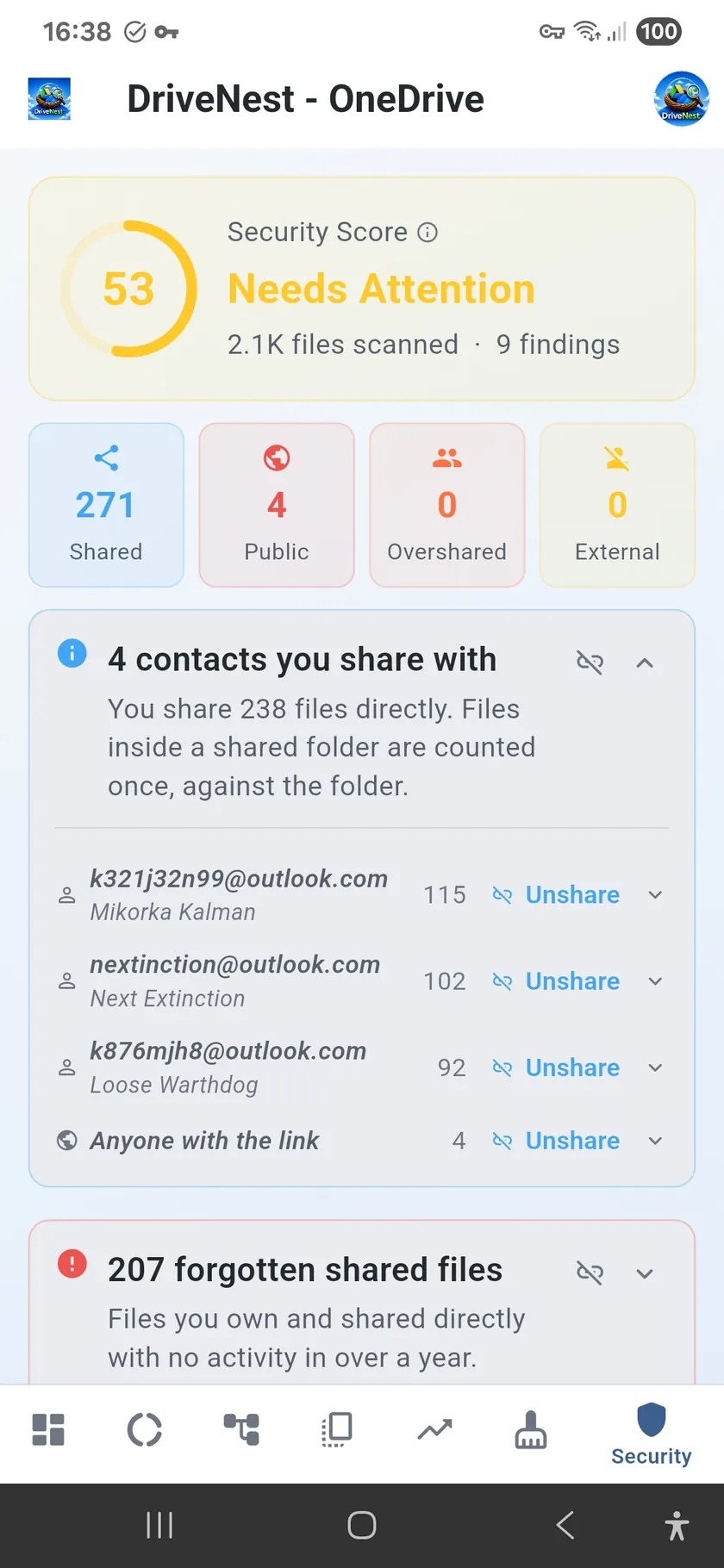
Seven screens. One complete picture.

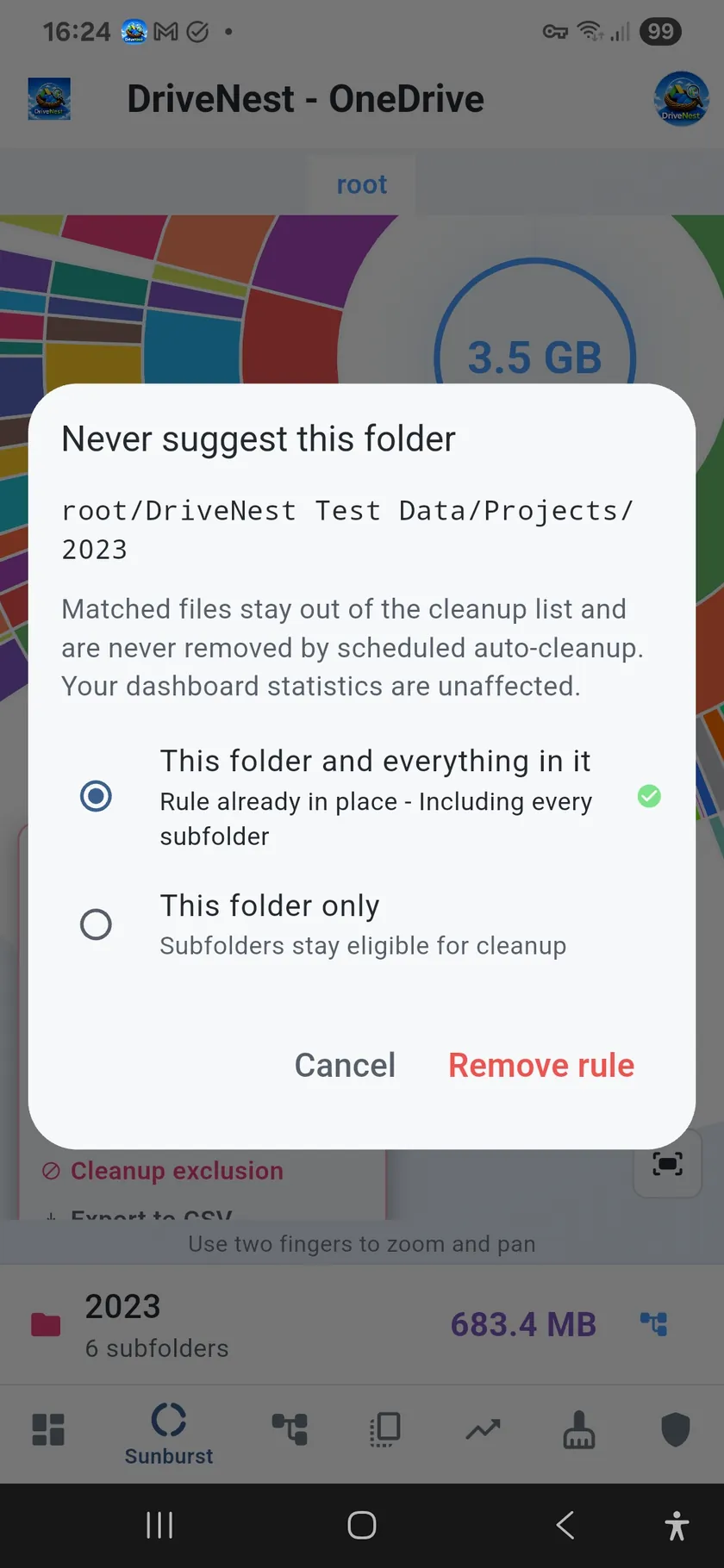
Each screen tackles a different aspect of your storage. Together, they give you full visibility.

What you get

Every capability has its own detailed page — follow a link to dive in. Unless noted, all of them work on both Google Drive and OneDrive.

Common questions about cloud storage

Short answers, with a longer guide behind each one.

How do I find duplicate files in Google Drive or OneDrive?

Neither cloud has a duplicate finder, and searching for “Copy of” misses renamed copies. You need something that compares file content, not names.

Read the guide →

How do I clean up Google Drive or OneDrive and free up storage?

Empty the trash, remove the largest files you no longer need, then deal with duplicates, old revisions and stale backups — in that order.

Read the guide →

Who can still see my files?

Links shared years ago stay open until someone closes them. A sharing audit lists every public link and every person with access.

See the security audit →

Start free. Upgrade when you need more.

Three tiers: Free, Premium, and Ultimate. Available as perpetual (one-time) or subscription (monthly installments, 6-month commitment). Subscriptions unlock scheduled scans and automation.

View plans & pricing →

⭐⭐⭐⭐⭐

Enjoying DriveNest?

A quick rating on Google Play helps others discover DriveNest and keeps development going. It takes 10 seconds.

▶ Rate on Google Play

Privacy first, always

DriveNest reads only metadata — names, sizes, folders and sharing info — never the contents of your files, on either cloud. Analysis runs on your device; nothing is uploaded. Google Drive access is strictly read-only. On OneDrive, write access is requested only if and when you approve an in-app action.

Metadata only, never file contents
You approve every action
Data stays on device
AES-256 encrypted backups
No analytics or tracking

Read full Privacy Policy →